


The Buzz about Killington's Honeybees
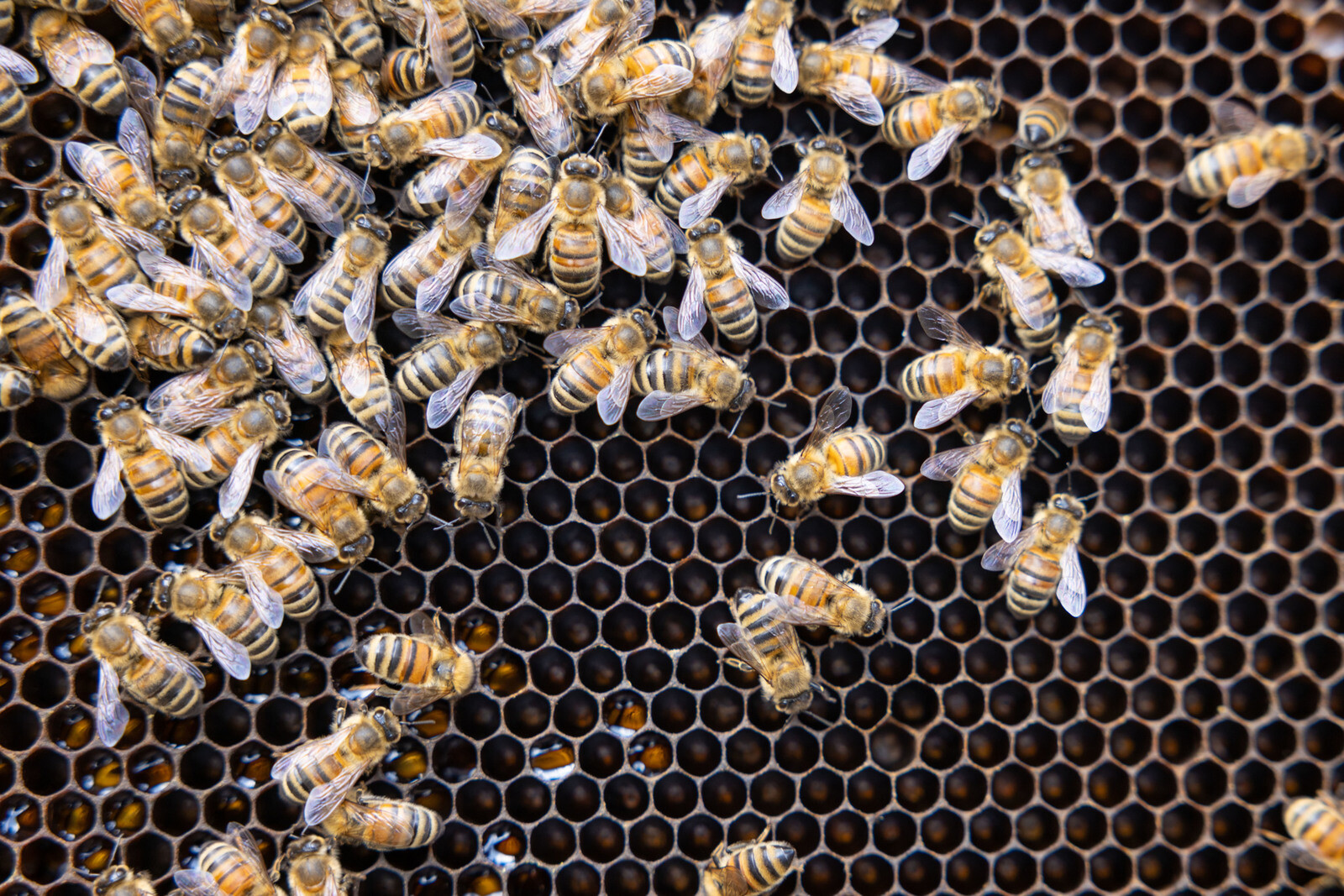
While we love winter at The Beast, it can be a challenging time for bees. So, as spring dawns, we’d like to provide an update on the health of our bee colonies at the Grand Café and around the resort. Killington’s resident beekeeper Matt Meservey has been buzzing about the hives and provided some insight after a recent visit to the Grand Café hive to nourish the bees with a snack of thinned honey.
“On Monday, April 8, the bees were visible and taking honey from the frame in the lower window, but not flying. The temps had dropped 8 degrees due to the eclipse, so they may have been flying earlier that day. By Tuesday, they had taken the honey 1 1/2" down and it continues to diminish. More importantly on Tuesday, they were flying and taking in pollen, likely from pussy willow and catkins on alder. This is a very good sign as bees only take in pollen when there is young to feed. On a warm day, they can be seen in the tube with yellow pollen on their back leg 'baskets'.”
Meservey is confident the queen of this colony is laying.
“She likely started laying in February. It takes three weeks to go from an egg to hive worker, then three weeks a hive worker to graduate to a forager for about six weeks. The foragers you see today are from eggs laid this year and the great winter bee die off should be ending or over.”
Inside the café, the colony is healthy and thriving, he said.
“You can see some of them on the roof and some on the bottom of the hive since the last cleaning. If you look from outside, you will see more and more bees flying figure eights at the hive entrance. These are orientation flights, meaning they are a few days from becoming foragers. They fly bigger and bigger eights until they 'know' the area and are confident enough they can make it back to go out and forage. Around the resort, some of the bees did not fare as well, which Meservey explains is unavoidable in husbandry and nature.
“In my three Killington yards, I lost two more colonies. Neither of them were a surprise as they were the weaker ones. Sometimes this is just fate. The queen doesn't start laying, dies over the winter, etc. However, my survival rate this winter was higher than it ever has been since I had more than just a few hives. I hope to have a record harvest this year.”