


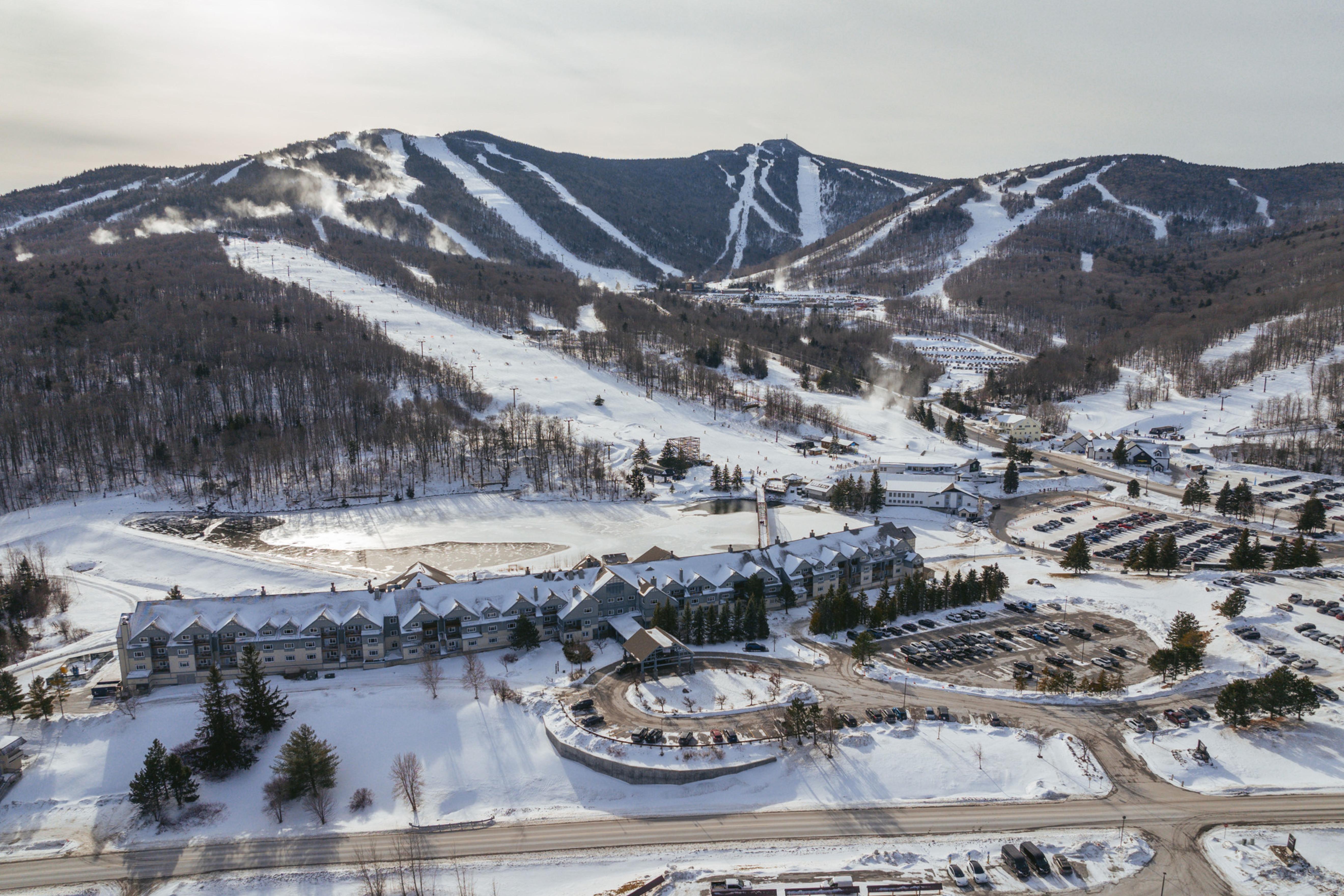
Our History
THROUGH THE AGES
THE EARLY 1900s
The origins of Killington Resort are closely connected to the development of Vermont’s ski industry in the first half of the 20th century. The scenery and rural beauty of the Green Mountains attracted visitors in the spring, summer and fall, but harsh, cold conditions made it challenging to do the same in the winter. The Vermont Tourism Board, founded in 1890, and the Bureau of Publicity, founded in 1911, established a formal commitment to year-round tourism by the state, and thanks to several societal factors in the 1930s, these organizations would soon find the solution.
In 1932, the Winter Olympic Games in nearby Lake Placid, New York, sparked a new public interest in downhill skiing. Also around this time, the formation of the Civilian Conservation Corps (CCC) spurred major growth of the Vermont State Park System. This federal public works program embarked on an aggressive nine-year campaign taking advantage of state and federal funds to have CCC workers build access roads to state lands and ski trails on state-owned mountains. Vermont now had a great way to promote its scenic beauty during the winter months and draw in tourism year-round: skiing!
Many people contributed to the fledgling ski industry, but much credit is due to one man. State Forester Perry Merrill—who learned to ski in the 1920s while living in Sweden—would prove to be skiing’s greatest advocate, earning him the moniker “Father of Vermont’s State Parks and Alpine Ski Areas.” It was Merrill who directed much of the development of ski trails, warming shelters and access roads to mountainous areas across the state. He also pioneered the concept of leasing state-owned land to private developers—a still-controversial idea—that enabled the development of major ski areas in Vermont, including Killington Resort.
1950s
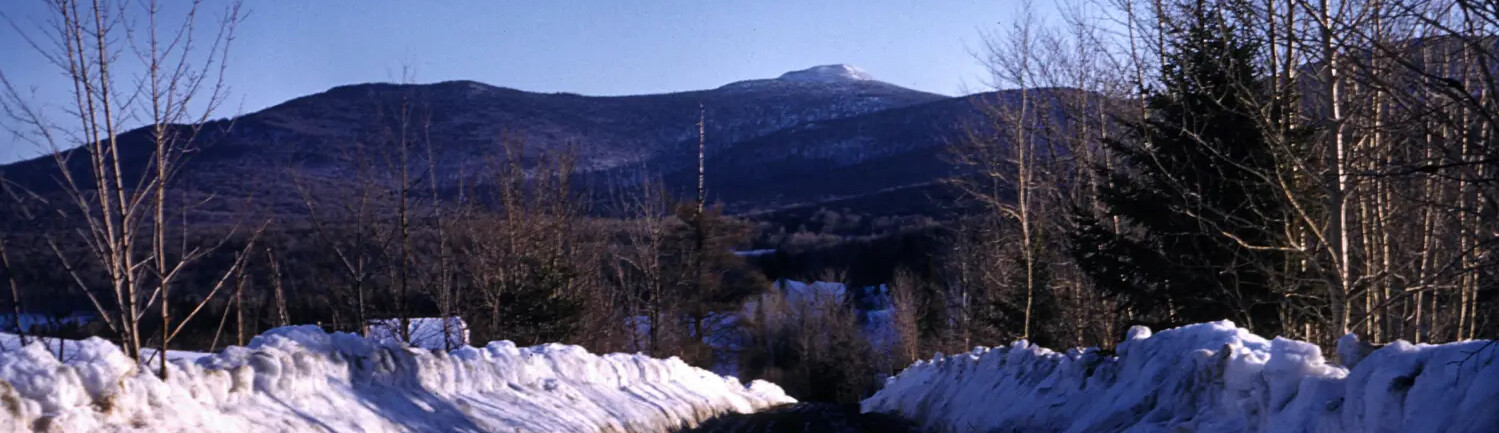
In 1954, 24-year-old ski enthusiast Preston Leete Smith approached Perry Merrill about his desire to lease the state land on Killington Peak and develop a ski resort, which he would call Killington Basin. With few resources of his own, Smith worked for nearly four years to amass enough investor dollars to make that dream a reality, eventually forming the Sherburne Corporation. It helped Smith’s cause that then Vermont Governor Joseph B. Johnson backed a policy to build state roads to remote mountain areas in the mid-1950s.
In 1957, the state began construction on the 4.4 mile Killington Road. $30,000 from the government was allotted to create a parking lot and ski shelter – this was a hefty sum, especially in those days. Once the road was completed, Smith and his team cut the initial trails and lift lines on the face of Mt. Killington, enabling the location for a parking lot and the lodge.
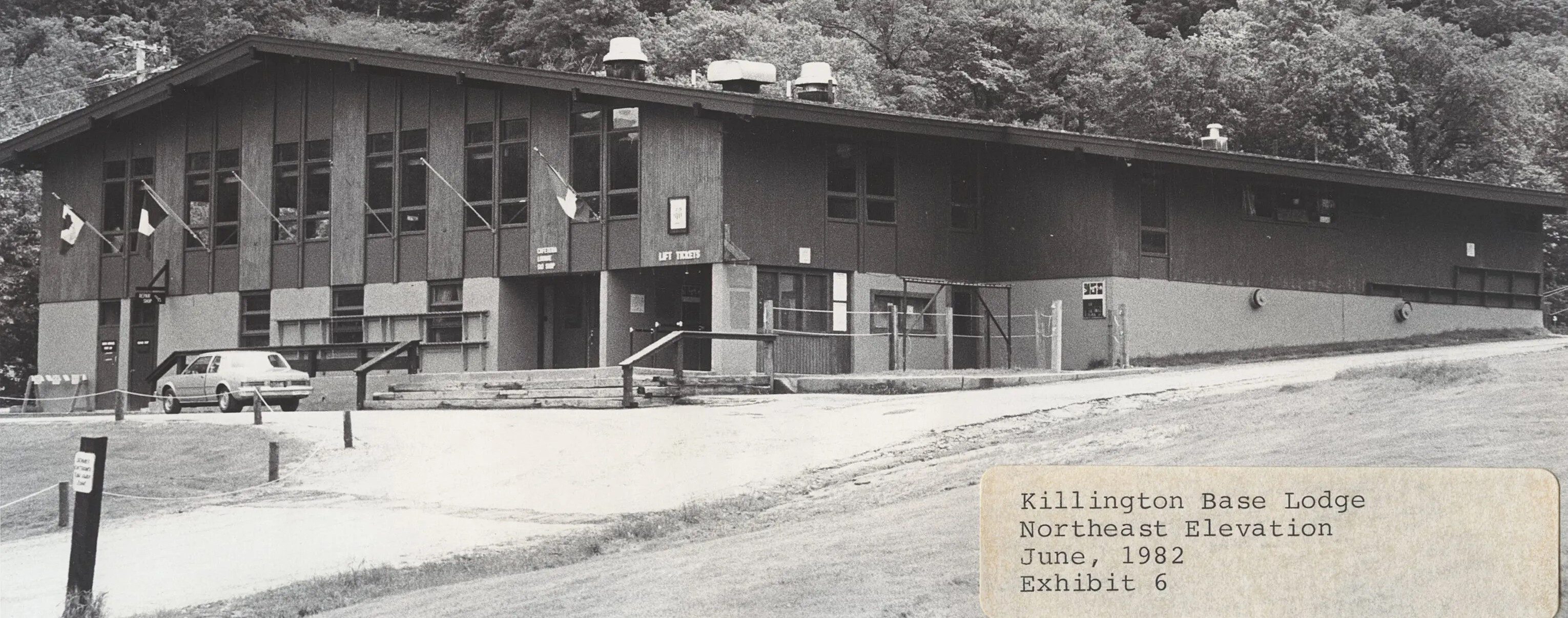
In the fall of 1958, the “Killington Ski Shelter” began to take shape. Smith described it as a “two-story, modernistic, glass-enclosed base shelter.” To save money, he tapped into the architectural talents of Vermont State’s Assistant Parks Director Robert Merrick Smith, who was a skilled landscape architect, for the initial designs.
Unfortunately, due to very wet weather, they were unable to complete the lodge in time for the first ski season. Pre-fabricated barracks from a CCC camp in Moscow, Vermont, were moved in to serve as a temporary shelter for skiers that winter. Killington Basin Ski Area celebrated its opening day on December 13, 1958, after a Thanksgiving storm dumped almost three feet of snow on the mountain.
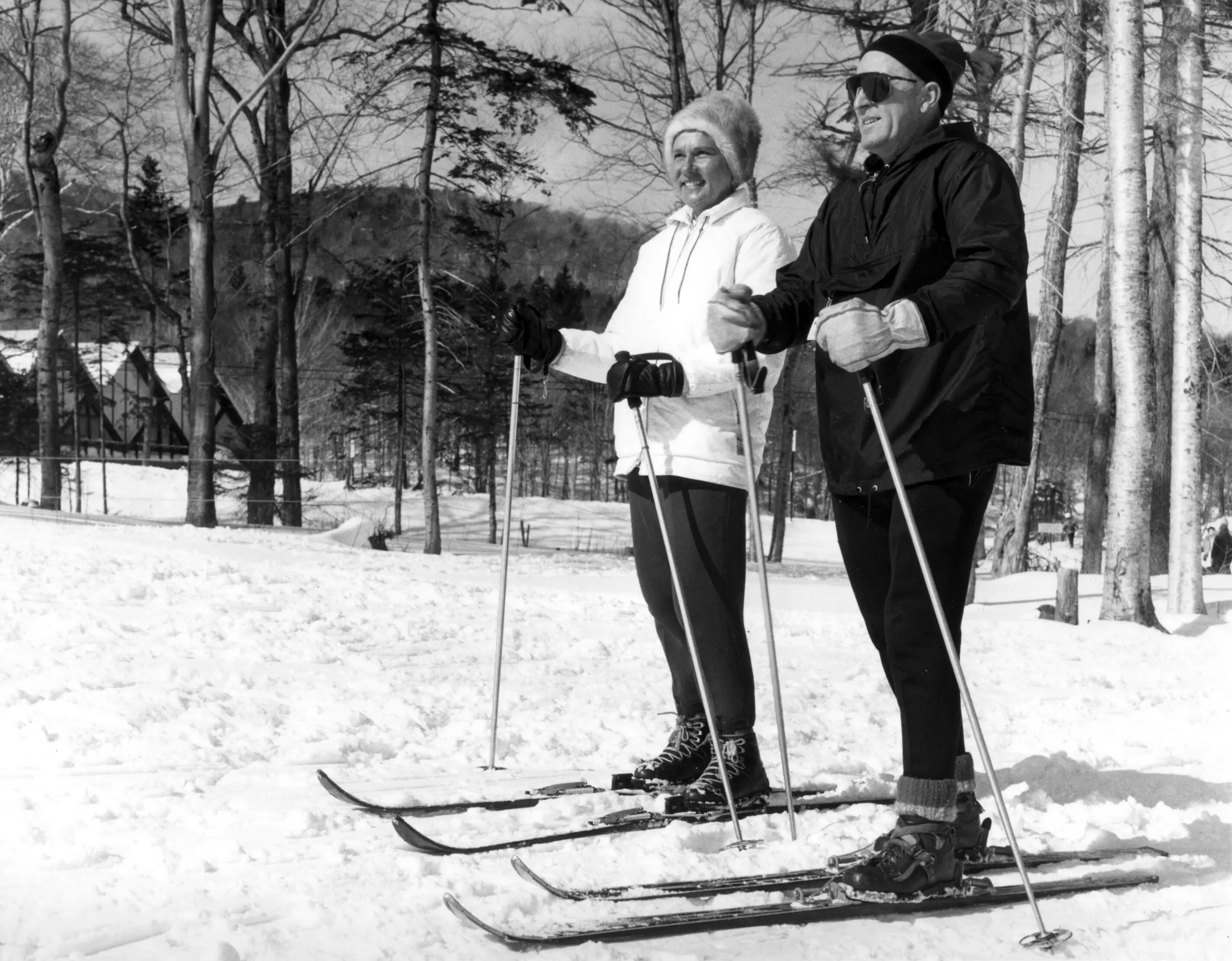
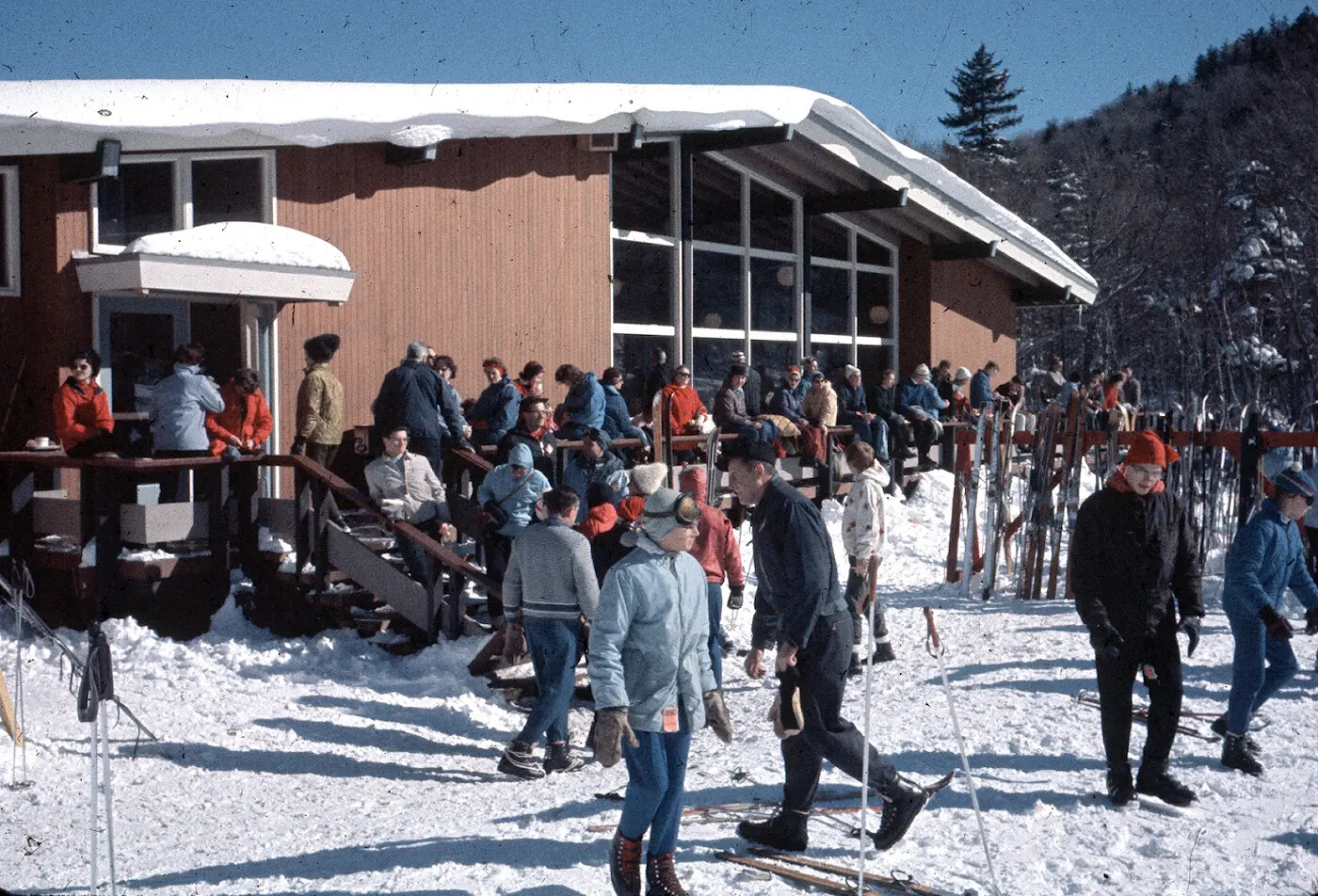
The original 6,000-square-foot Killington Base Lodge (KBL) was finally completed in 1959. Smith called it the Killington Ski Shelter, and it was the first permanent ski lodge at Killington Resort. Skiers, including Pres Smith himself, were quite pleased with the finished project. He said, “the architectural style exceeded Sherburne Corporation expectations as to what the forestry department would produce.”
The lodge’s design was a perfect example of modernistic architecture, which was being nationally adopted around that time. It featured unconventional roof shapes, an open floor plan and playful informality. A large bank of windows faced the ski trails, providing great views of the slopes. However, to reduce costs, the parking lot side of the building featured far less glass. The lodge design also took advantage of its natural surroundings, with rustic wooden beams throughout.
1960s
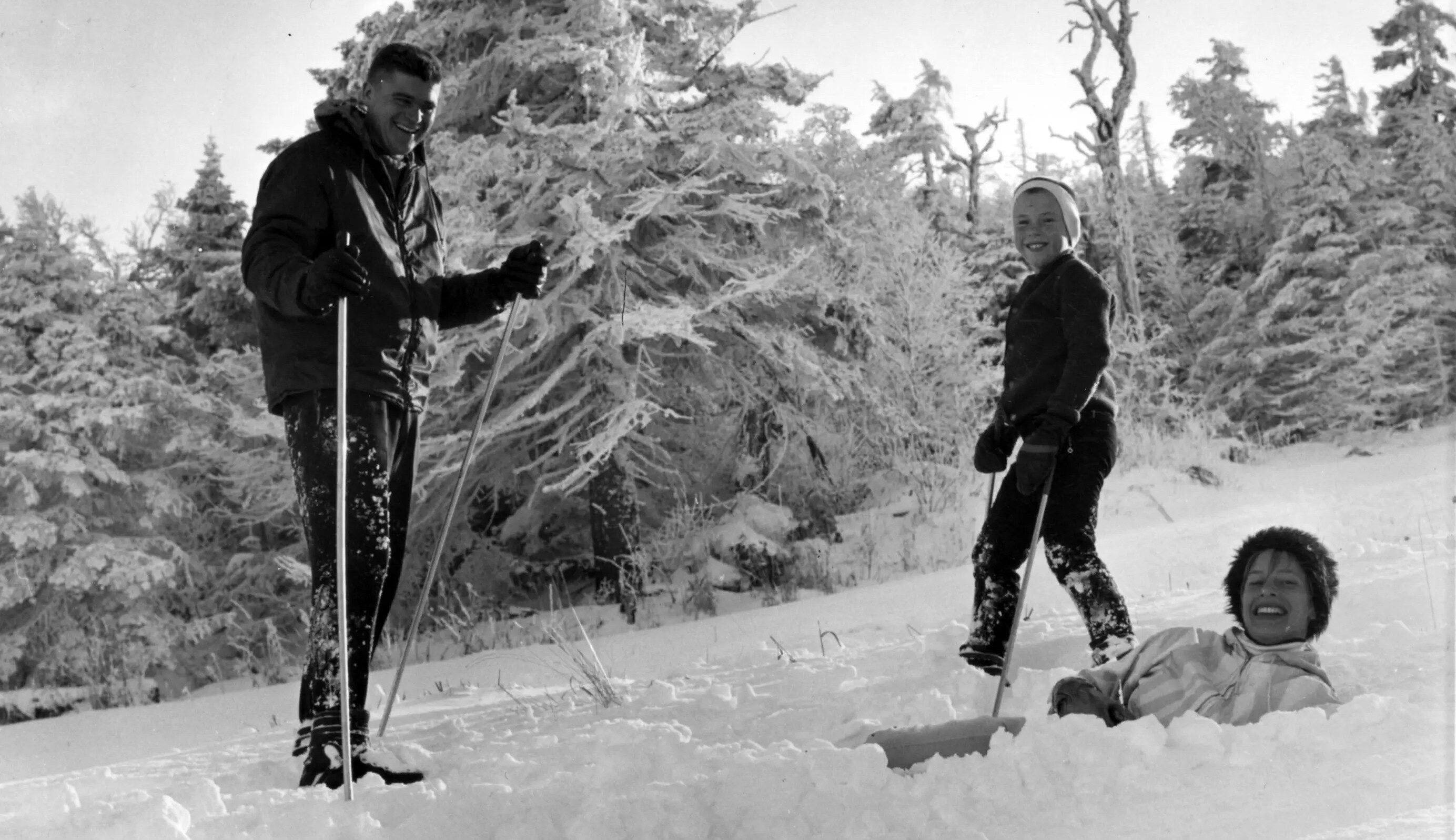
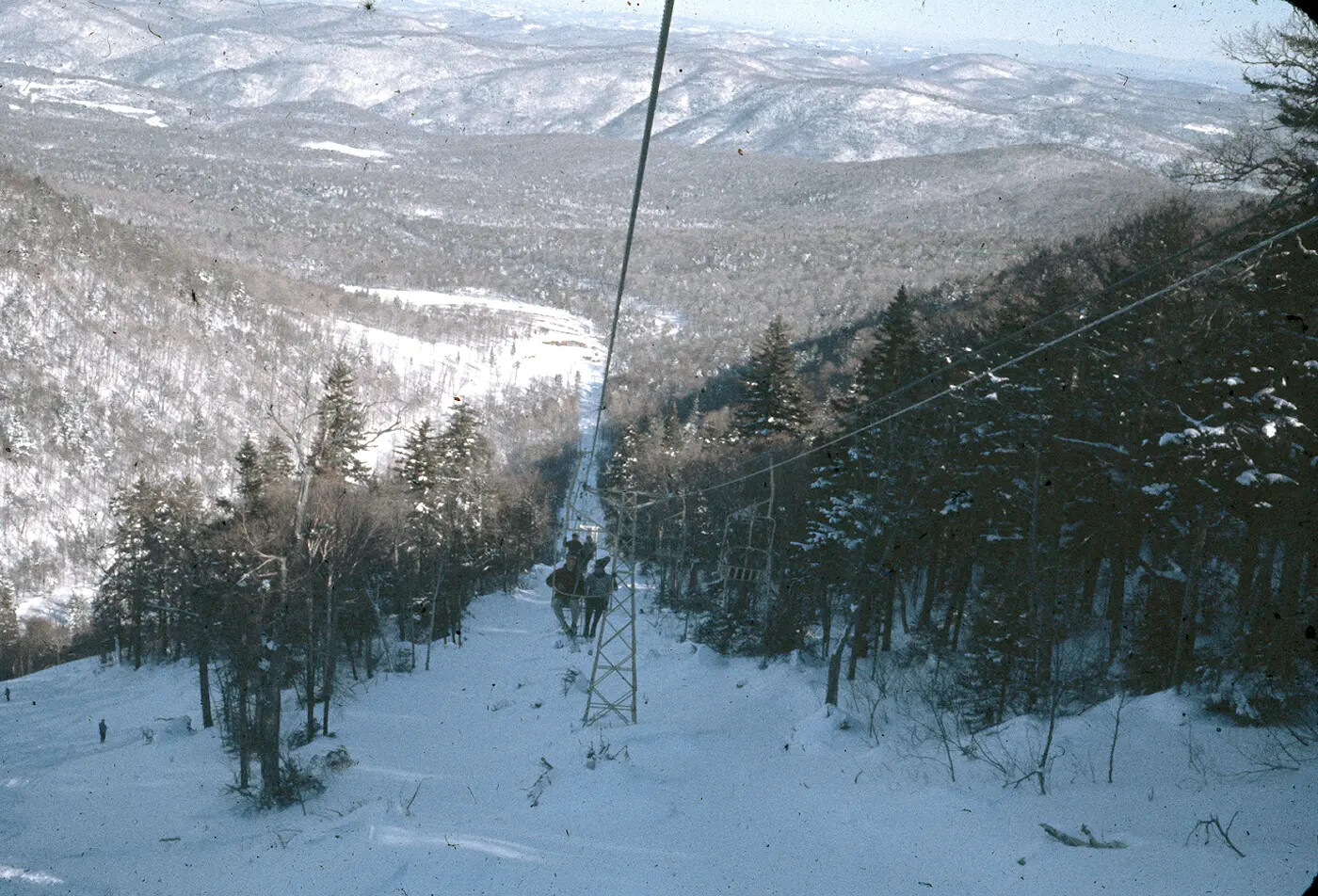
In 1960, the ski area reached the peak—of Mt. Killington that is—with the installation of the 6,300-foot Killington double chairlift and three new trails, funneling skiers down the face northwest of the mountain. In this decade, the resort would continue to expand at a pace that was well above industry standards.
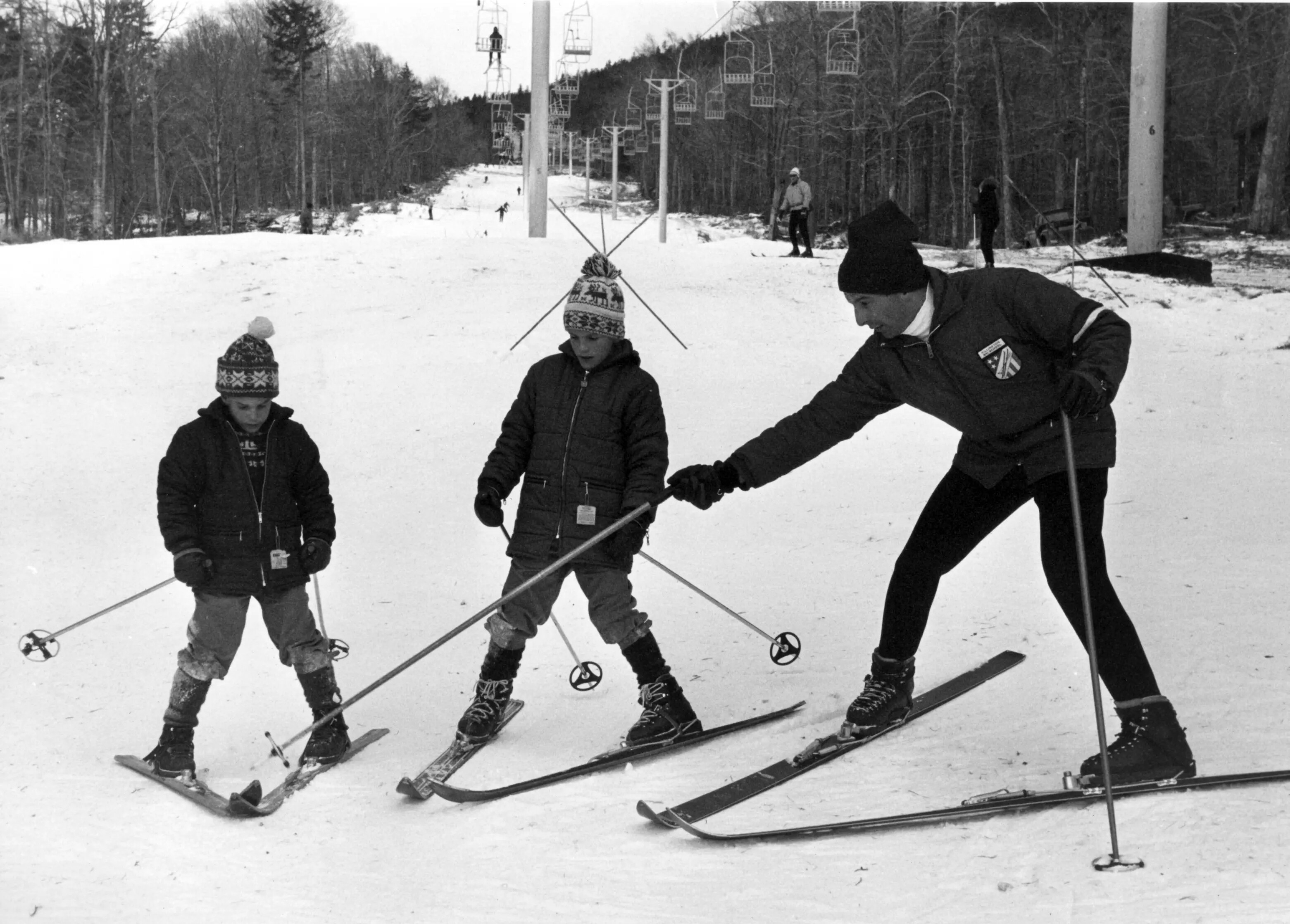
Pres Smith continued to propel the resort’s progress with new ideas on how to report snow conditions and advances in ski instruction that helped to make Killington’s ski school a destination for anyone who wanted to learn. His dedication to snow at all costs also consistently attracted professional skiers and Olympians to train. Of course, he did not do it alone. Many industry pioneers worked at Killington, such as Charlie Hanley, who was hired to design and build the initial kitchen system in the KBL. Over his 8-year tenure at the resort, Hanley was responsible for many innovations, such as the patented (but now obsolete) ticket wicket.
During the 1962-63 season, beginner terrain was being added to Killington at breakneck speed and huge advances were made in snowmaking technology. The Snowshed chairlift was installed first, and then operations expanded to “North Peak,” which was soon renamed Ramshead. These kinder, gentler slopes enabled new skiers to try out the sport, and Pres Smith insisted a beginner trail be provided as a way down from every chairlift, including one that ran from the peak Mt. Killington to the KBL (Great Northern).
By the middle of the decade, Killington Basin had grown quickly. The resort held the distinction of actually turning a profit every year in operation, aside from its first. All this excitement continued to attract more skiers, and by 1965, the KBL could not contain them all. The ski area tapped the talents of Rutland architect Payson Webber to design the first lodge expansion, completed in 1965. That doubled the size of the lodge to 12,000 square feet.
This addition maintained the open feel of the lodge that Merrick Smith had created. Outside, the resort also expanded its terrain to include Snowdon Peak. Revenues reportedly reached $1 million for the 183-day season, which spanned from mid-November to mid-May.
1970s
By the 1970s, ski fever was gripping the world. At Killington, the resort had continued to expand, adding Killington East and cementing it as Vermont’s largest mountain resort. After several years of construction, the world’s longest gondola opened, running from Route 4 to Killington Peak. This new lift serviced a five-mile ski run (Great Eastern) and offered 3000 feet of vertical drop.
In addition to new terrain, huge advances in snow making and instruction programs were underway at Killington. Pres Smith was aggressive in his desires to ensure and extend the ski season, adding snowguns to upper mountain trails while others balked at the idea. Killington introduced a ski school for instructors, added a cross-country ski program, and upgraded to chairlifts where poma lifts once ran. But in 1973, an energy crisis, inflation, and political opposition towards ski area expansion caused the resort to lose money for the first time.
It was not long before the resort recovered, largely by expanding its summer business with features such as tennis courts, ponds, and hiking trails. Killington Resort continued to expand and with the addition of ski trails and lifts on Ramshead Mountain, Skye Peak, Bear Mountain, and Sunrise Mountain. In 1979, revenues topped $1 million and the Bear Mountain Complex, including lifts, new trails, and a lodge, was completed. The Beast’s dominance was truly cemented in Vermont’s ski history.
1980s-2000s
For everyone from U.S. Olympic team athletes to casual enthusiasts, Killington was the place to be in the '80s. After nearly 30 years of trying, lift-serviced June skiing was finally achieved in 1982, when Killington operated until June 15. In 1981, the resort reached 100 trails and began to offer Meet the Mountain tours to help guests negotiate its vast expanses.
In 1984, Killington’s parent company, the Sherburne Corporation, was restructured as S-K-I limited (it now owned Sunday River in Maine and Mount Snow in Vermont, as well.) However, recently elected Vermont Governor Madeline Kunin would deliver a major blow to the company, by choosing to go after ski area developers. Killington was denied a permit for a sewage treatment plant for the Sunrise condominium development, a blow that would jeopardize rapid development in the area. Even embroiled in a political battle, Pres Smith’s company soldiered on.
In February 1996, now-defunct American Skiing Company purchased Killington Resort from S-K-I limited. The new ownership completed several capital improvements, including swapping the old Killington double chair for a new gondola, known as K-1, in 1997.
POWDR Corp. acquired the resort in 2007. Killington Resort saw its first new lift addition in a decade with the installation of the Skye Peak Express Quad, open for the 2008/09 season. This new high-speed lift greatly improved access to the trails on Bear Mountain.
2010s
In 2010, the Peak Walkway was installed, sunsetting the early-season tradition of trucking skiers to the snow on North Ridge. Killington’s superior early season snowmaking could now be accessed by foot from the top of the K-1 Gondola. At this end of this same season, the resort announced the replacement of the Peak Lodge and began the project with the demolition of the original lodge atop Killington Peak.
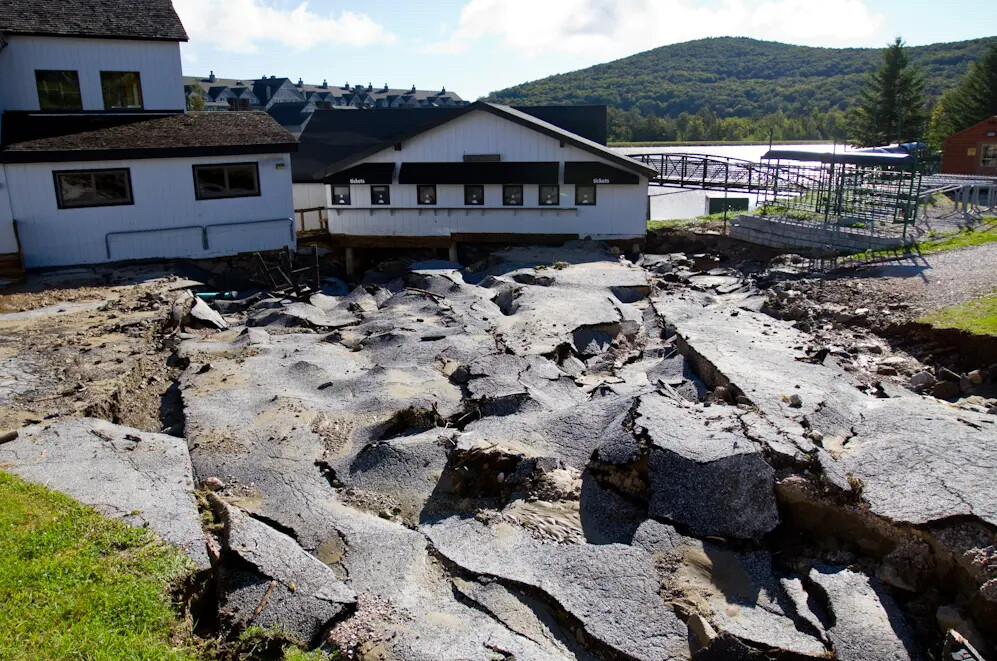
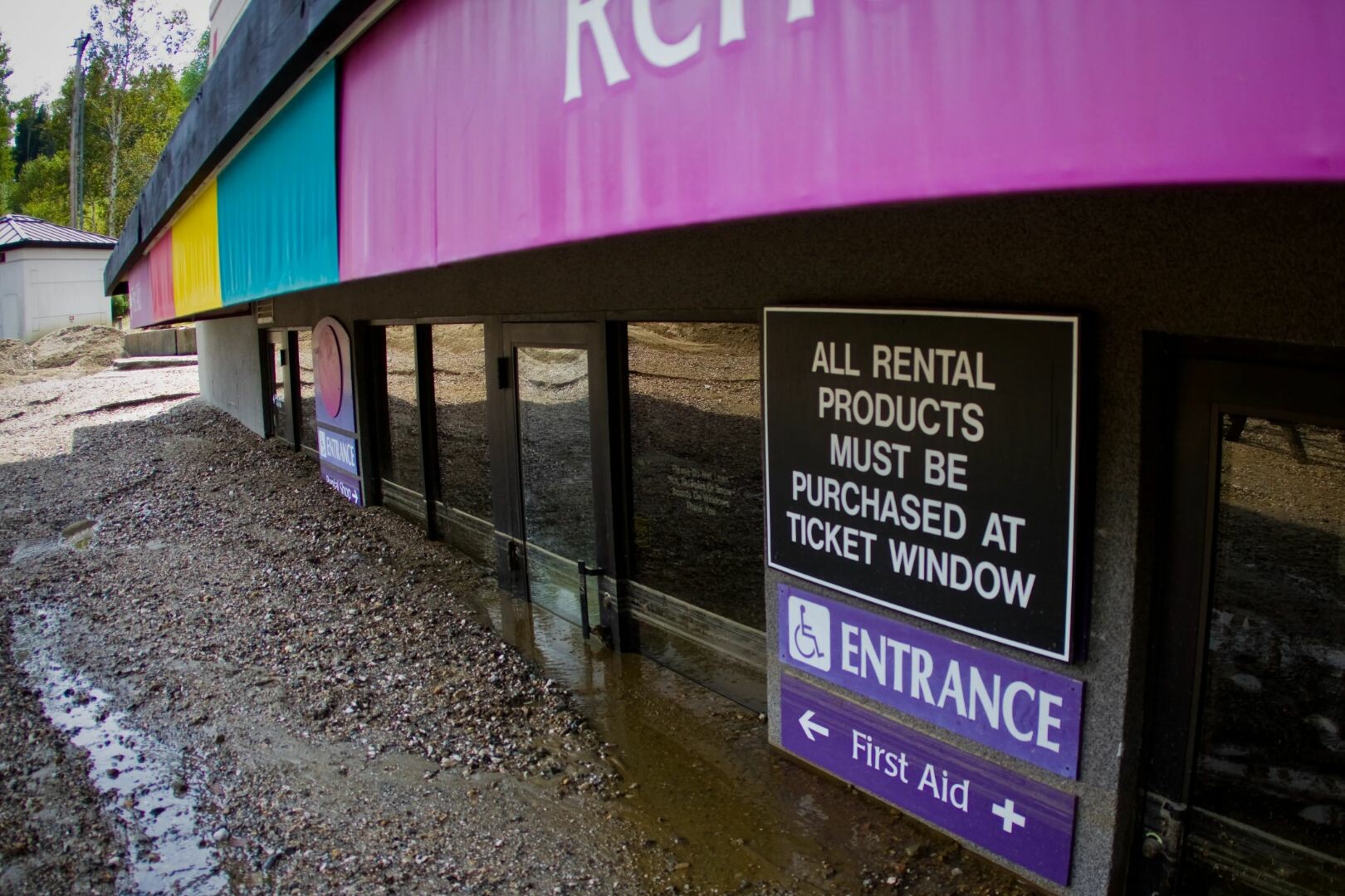
But, in summer 2011, Tropical Storm Irene hit the state of Vermont. The unprecedented winds and rains of the 100-year storm cut off entire communities. In addition to road washouts, the Superstar Deck of the K-1 lodge collapsed. This damage slowed the process at the peak, while the resort focused on rebuilding the deck, and adding the new Roaring Brook Umbrella Bar (now called the Superstar Umbrella Bar) next to K-1.
The Umbrella Bar is guest favorite during the springtime, and got lots of use during the 2012/13 season, when Killington stayed open until May 26, the latest closing in nearly a decade. The Peak Lodge would finally be christened in 2014.
In addition to earning its “King of Spring” moniker, Killington had become somewhat of a freestyle mecca in the 2000’s. In 2011-2013, it enjoyed a three-year run hosting top professional skiers and snowboarders at the Dew Tour.
After many years of dominating winter, Killington embarked a new focus on year-around activities beginning in 2014, with addition of lift-served mountain biking from the Snowshed Express Quad that summer. The Adventure Center really began to take shape in 2015, with the addition of the Skye Ropes Course, Soaring Eagle, and Beast Mountain Coaster.
In 2016, Killington began hosting the Audi FIS Ski World Cup, flexing its snowmaking might to turn Superstar in a world-class racing facility in November, while many Western resorts were forced to cancel races due to lack of snow. That year would begin Mikaela Shiffrin’s five-year winning streak, while massive crowds descended on the Beast to catch the action each season.
New owners POWDR Corp. continued to make major capital improvements to Killington throughout this decade. In 2018, $25 million total was invested, with improvements including a brand-new, high-speed six pack (the Snowdon Six Express), several tunnels to improve the flow at trail intersections, the conversion of the North Ridge Triple to a quad, and the addition of the South Ridge Quad. The resort also upgraded to an RFID ticketing system.
In 2019/2020 season, a major overhaul of Killington’s freestyle terrain began as the resort became a member of the Woodward parks family.
2020s
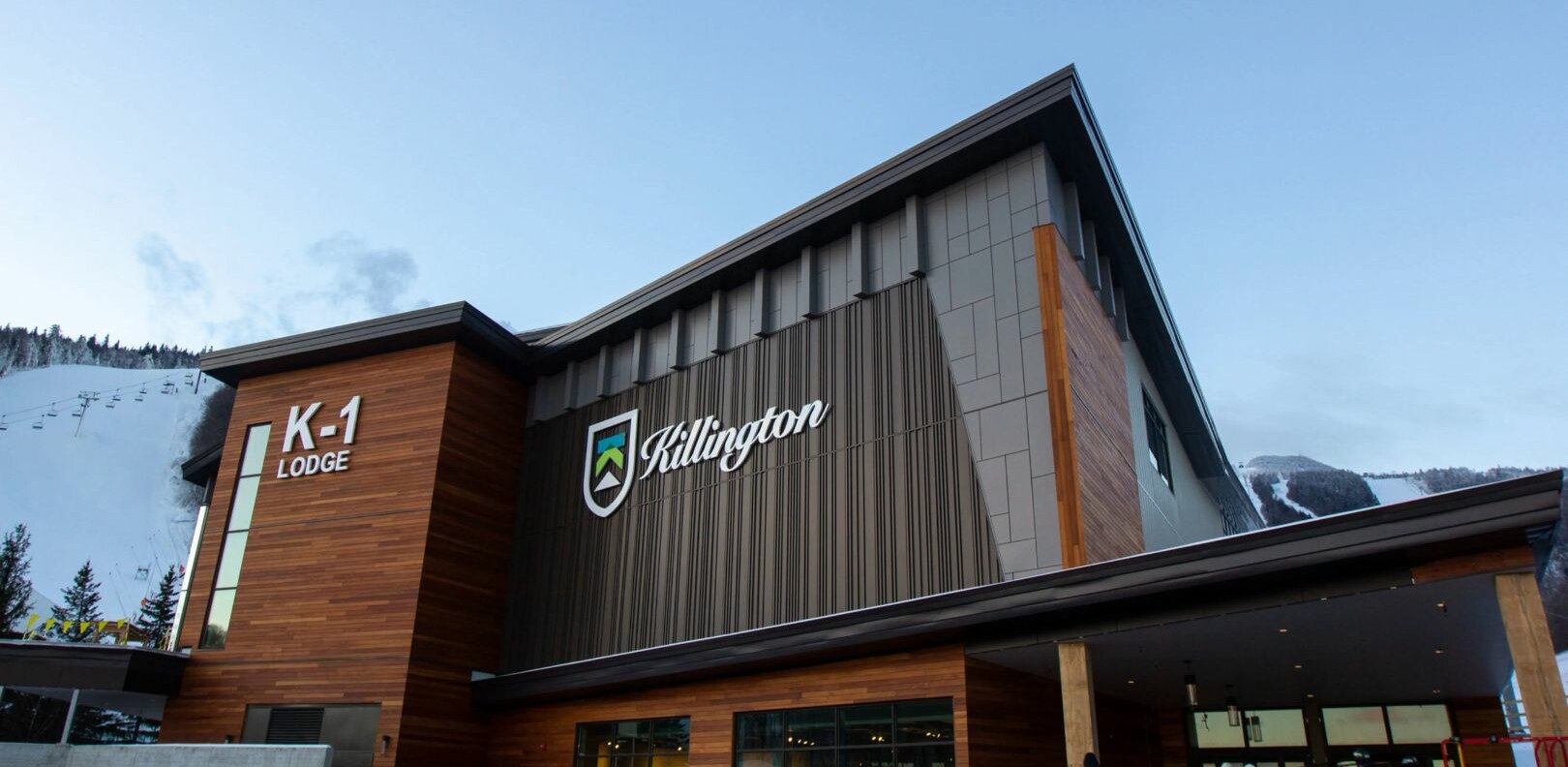
Killington announced its next major project, as the new, state-of-the-art K-1 lodge would open in 2019. Construction began as planned, and the shell of the new K-1 lodge took shape, dwarfing the historic structure. But as the calendar turned into 2020, the COVID-19 pandemic showed up with other plans.
Stalled, but not discouraged, the resort got back to work, and the original K-1 Lodge was demolished in the spring of 2022. Also this season, Superstar stayed open until June 4, the latest lift-accessed skiing in 25 years. Over Memorial Day weekend 2022, the resort was even able to offer skiing, golfing, and mountain biking at the same time!
Near the start of the 2022/23 season, the new K-1 Lodge opened for skiers and riders. The 58,000 square foot structure is a three-story modern marvel, designed by Middlebury-based Bread Loaf Corporation. It includes seating for 950 guests and stunning 180-degree views. It also is home to one of the five escalators in Vermont, the singular moving staircase in Rutland County.
In fall 2024, Killington Resort entered its independent era, after being purchased from POWDR by a group of passholders with longstanding ties to Killington. With local ownership at the helm, the goal is to improve the skier experience wherever possible, with a commitment to re-invest all profits. Millions of dollars of capital investments including low-energy snowguns, a new lift on Superstar, and all new cabins for the Skyeship Gondola were announced at the time of the sale.