


Managing The Beast’s Snowpack from Early Winter through Late Spring
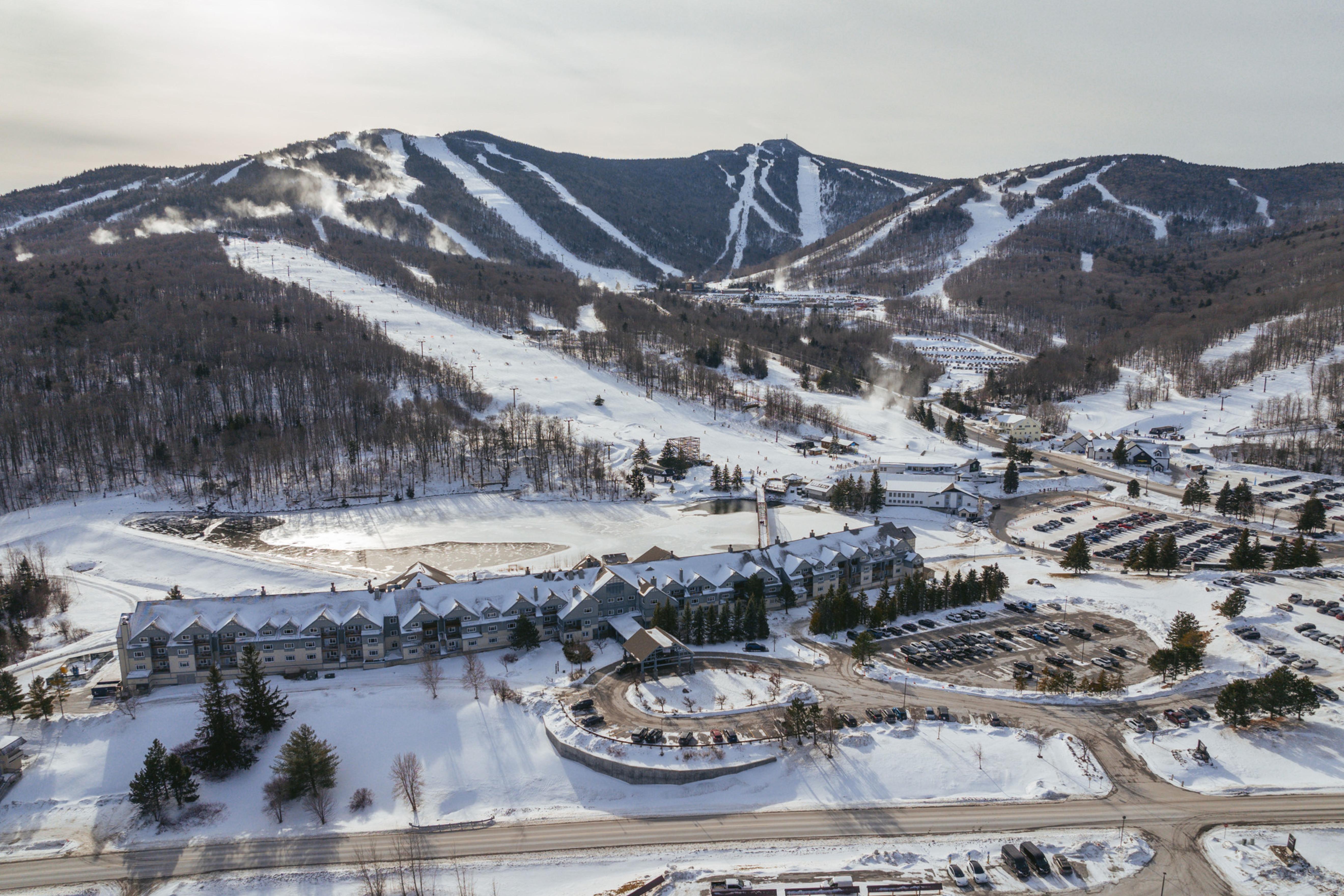
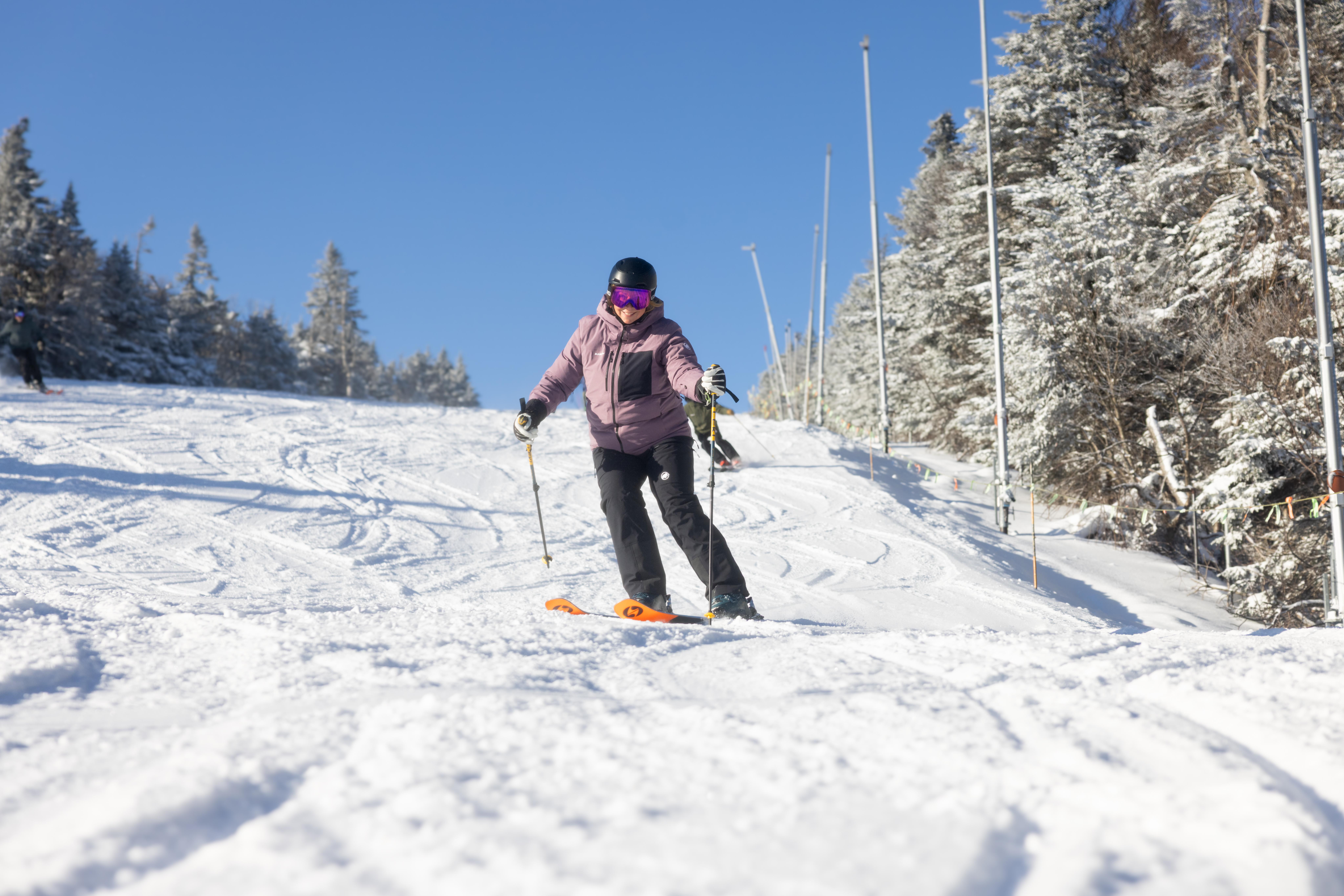
Preparing The Beast for the longest season in the East starts well before the spring. We’ve talked recently here about how our snowmaking upgrades paid dividends this season, but much more goes into preserving snowpack than just making a lot of snow and hoping for the best. Recently, we sat down with Dave Wright, Killington/Pico’s Grooming & Trails Manager, to get the inside scoop on all his winter grooming strategies and how we manage to maintain the snow on Superstar each spring.
Long before winter winds down to one lift and one long trail, the scale of what Dave manages each season is pretty staggering. Between Killington and Pico, he keeps tabs on around 40 staff members, 20 grooming tractors, 6-8 specialty tractors, and up to 8 terrain parks and 213 trails at full capacity. While not all those trails will get a groom during a given season, it’s certainly no small operation. Like much of our mountain operations, plenty of daily planning is involved.
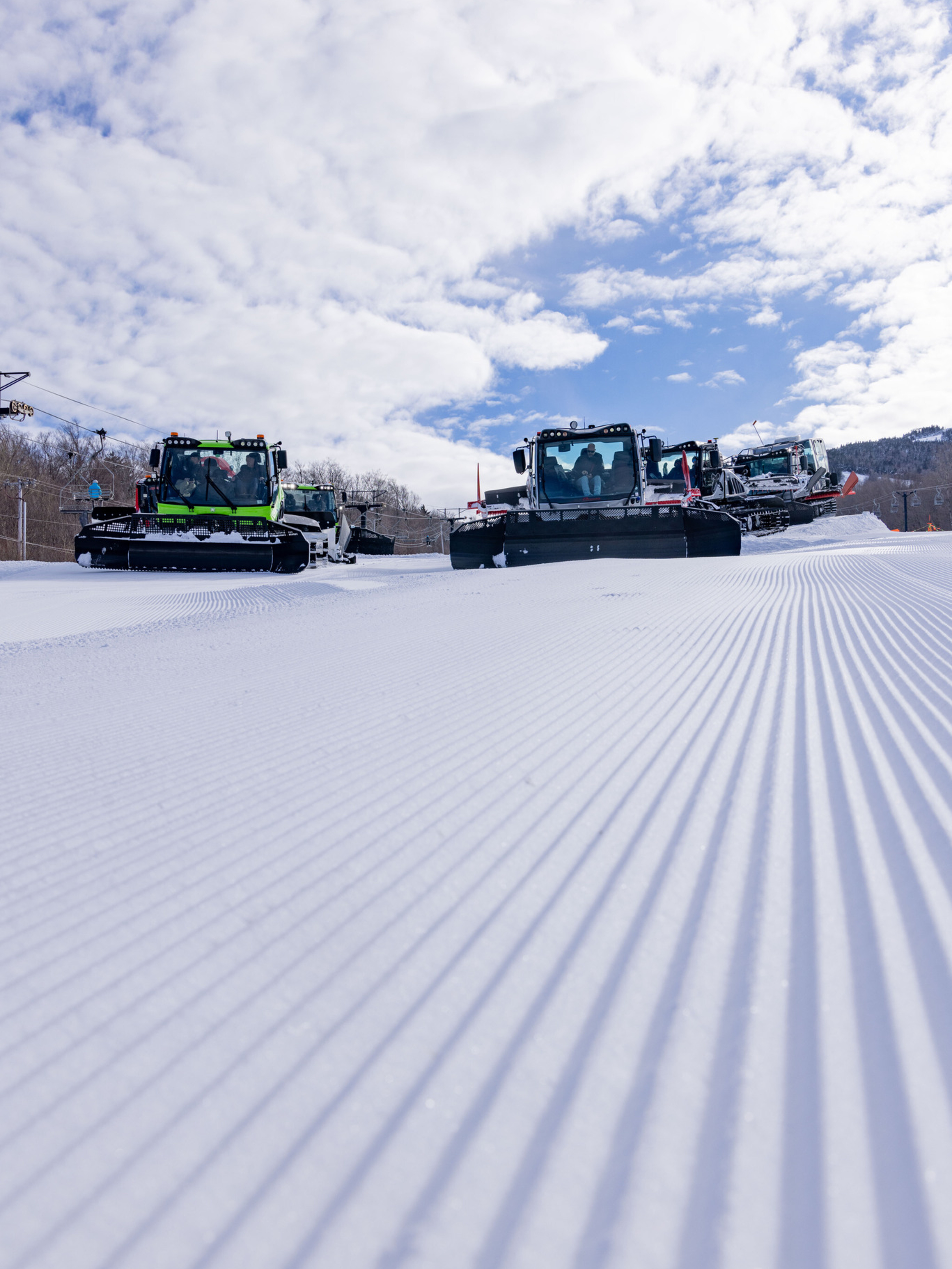
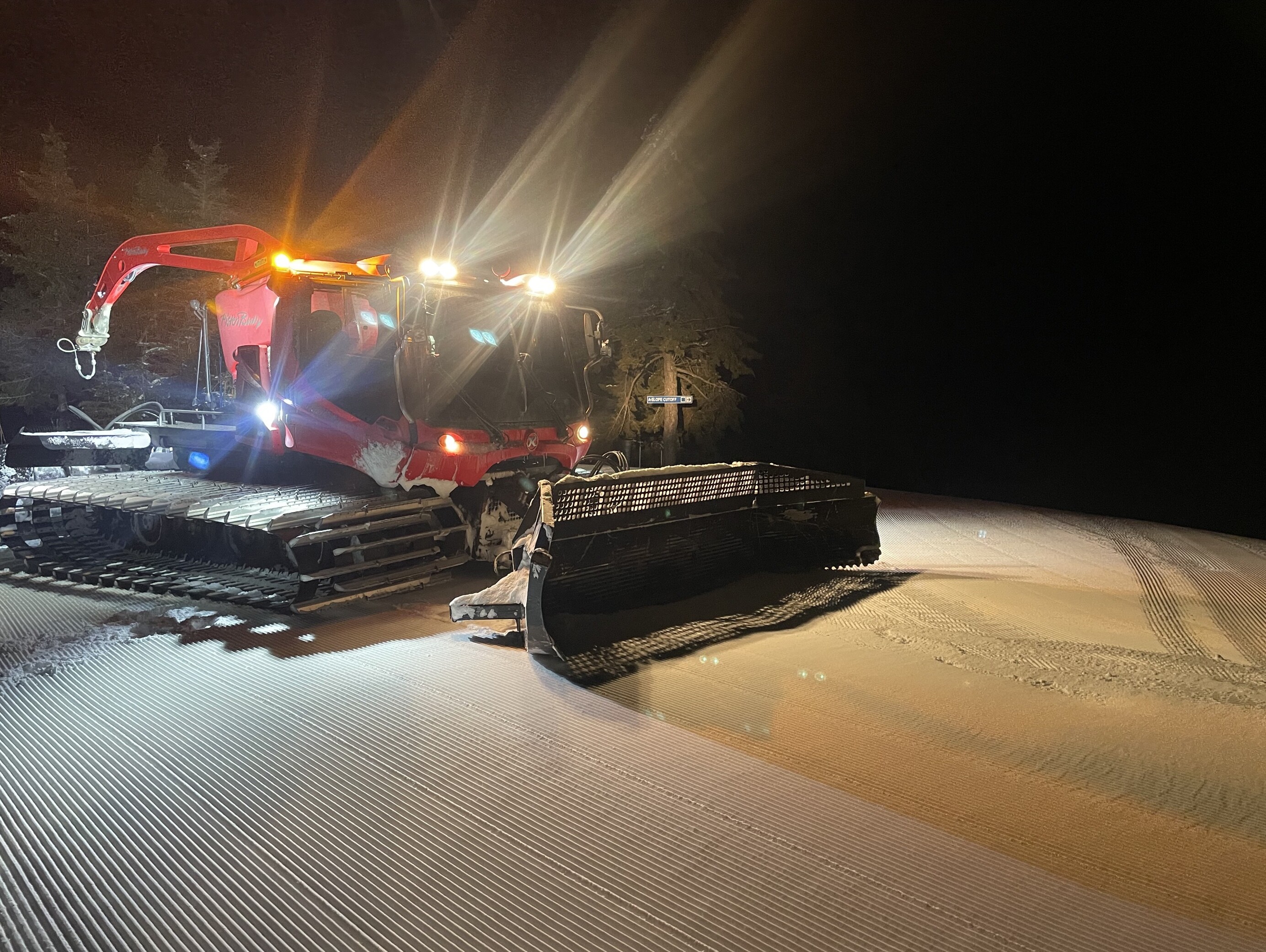
On a midwinter evening with "normal” weather, there aren’t quite as many factors to consider in that night’s grooming plan. But when variables like temperature and precipitation start changing the snow, that night’s grooming plan gets a little more complicated. A certain number of key trails are bound to see a groom each night during midwinter, but as Dave points out, much more goes into whether a “bonus” trail with largely natural snow coverage sees some corduroy by the morning.
“It’s a lot of things. How many staff are available on the shift? How many machines are available to use? What’s not being used for something else? Are we doing a park build? Do we have the time for it? Even things like, what is going on with the snow—is it a fresh snowstorm? Natural snow we can move along a lot faster and kind of get more done.”
The type of snow matters plenty when thinking about grooming. Grooming tractors need at least four inches of compacted snow on a given trail to avoid dragging its crossbar on the ground and potentially damaging the machine.
“Man-made snow is going to have more density to it and is going to go a lot farther in terms of compaction,” Dave says. “The general rule of thumb is that a foot of natural snow will compact to one inch, so if you had four inches of man-made on a trail, it probably would go further than a foot of natural.”
That fact has helped us out plenty on Superstar over the years, where our snowmaking might is displayed most prominently each winter. Even during this season, where natural snowfall was a tick below our seasonal average, cold temperatures and a highly efficient snowmaking system created a formidable base.
Dave agrees: “For a year where we didn’t have World Cup, I think we’re doing pretty good. I think we were able to make a lot more snow, and faster.” One section near the bottom of the trail, traditionally a “weak spot” for us in the past, had over 37’ of snowpack at its peak this season.
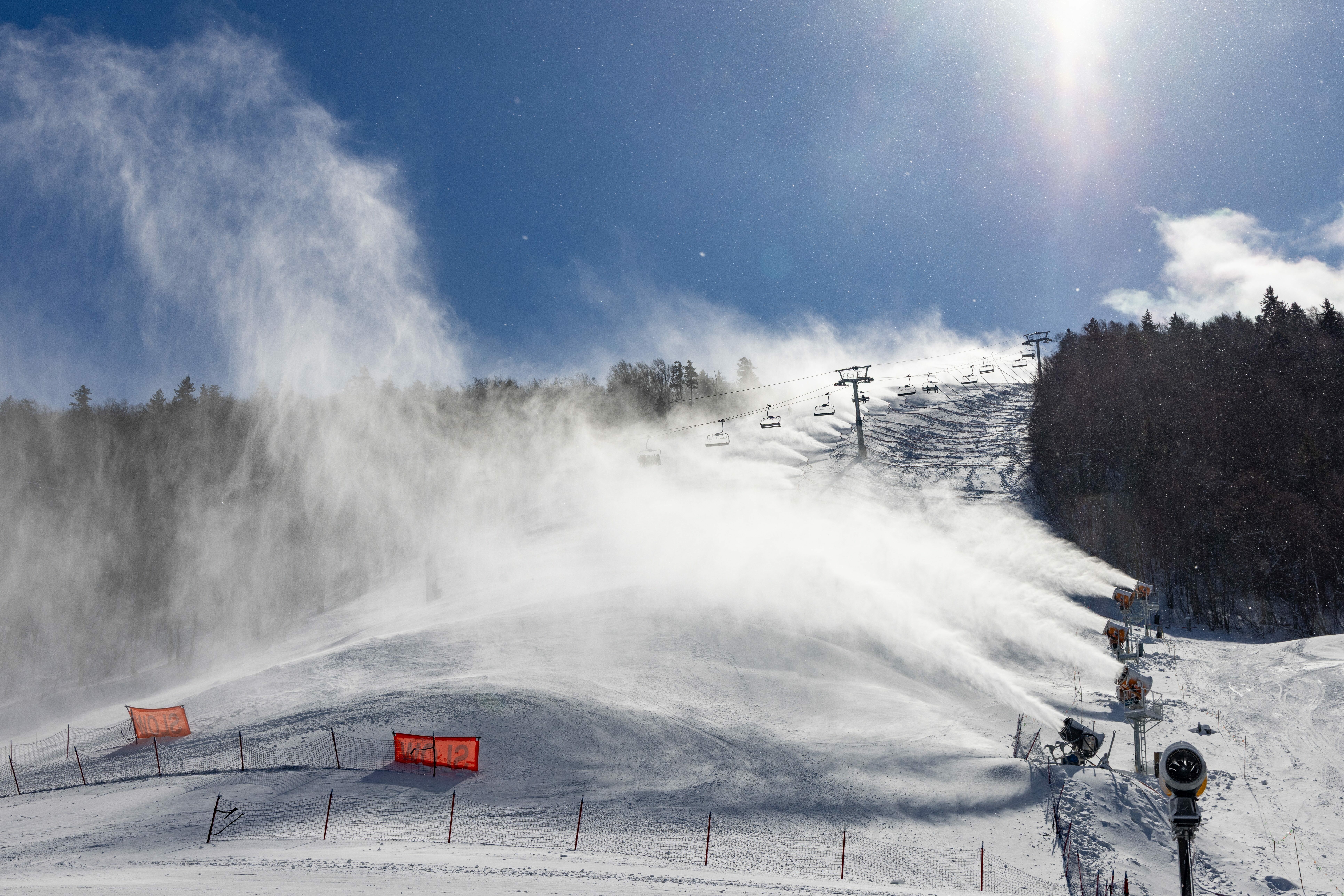
Snowmaking and grooming operations often need to work hand-in-hand, especially when our snowguns are actively making snow. Our new low-energy snowguns create a wetter, denser snow that can, at times, make visibility difficult for skiers and groomers alike. Factors like current weather, temperature, and elevation all affect the kind of snow coming out of a given snowgun.
“A lot of times, we’ll wait for the snowmaking to be complete, so we have the visibility and can see what we’re doing to push it out,” Dave says. “But it also does some good to let the snow sit and cure, so we’re not mashing in too much moisture in the low-energy snow. If you let it sit, you get a better product.”
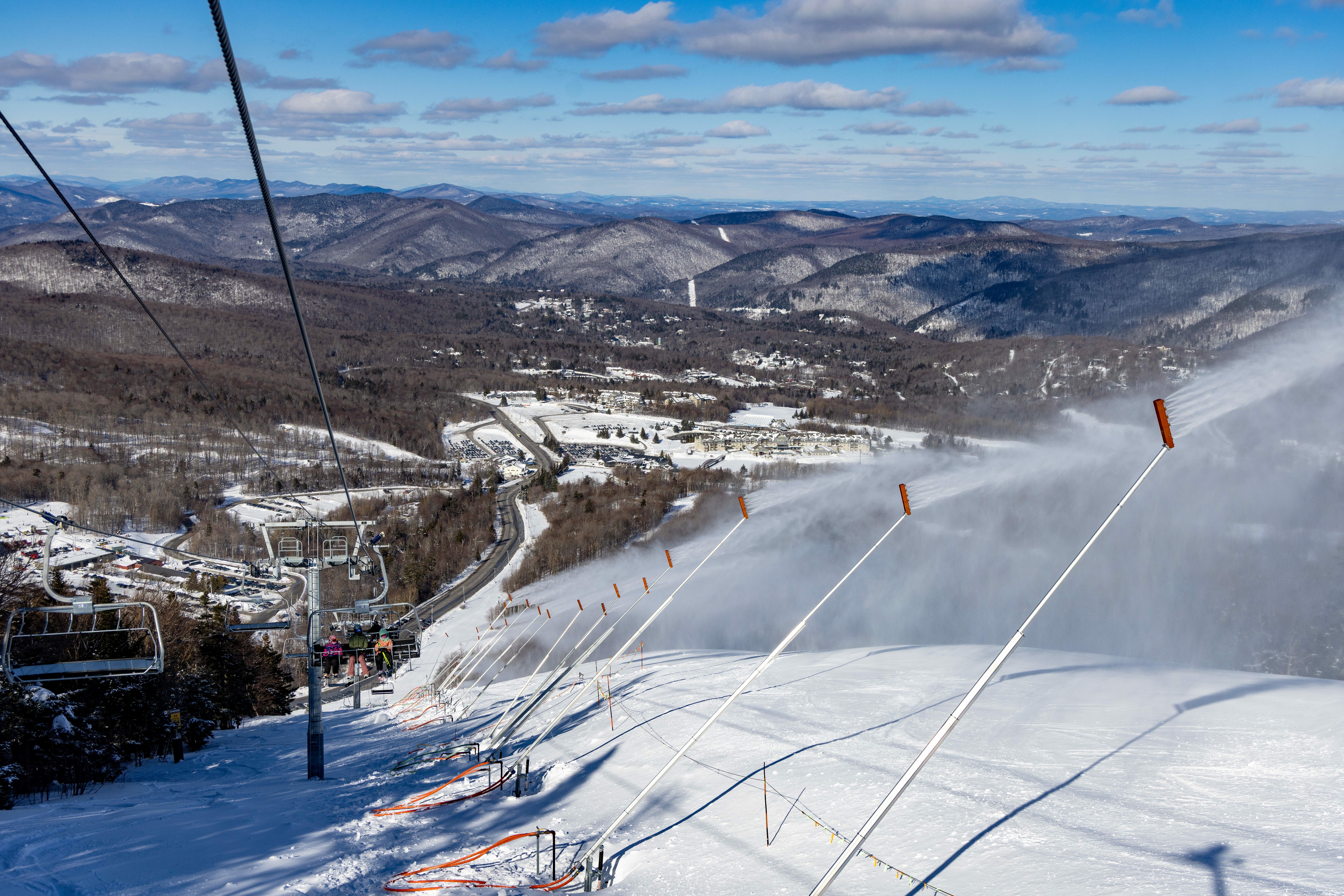
When East coast weather doesn’t want to cooperate, especially during a dreaded freeze/thaw cycle, working to sustain that product is crucial. When asked about strategies for combatting icy surfaces, Dave says it’s a lot about slowing down and working through the tougher surface with the grooming tractor’s blade.
“You really focus on renovating the surface, getting the air back in the snow because essentially, when it’s frozen and hard, there’s no air left. If you spend the time to actually move the snow around and put the air back in it, it tends to ski better the next day.”
As an employee at Killington since 2005, Dave has learned more than a few tricks of the trade. One bonus fix he’s found for tricky surfaces: skilled skiers and riders.
“I actually think the biggest thing that saves us after a weather event are the skiers. We run [a trail] over, get it open, get it safe—might not be the best skiing, but the diehards that come out actually help beat the snow up and put some air back in it themselves, and it gives us a little something more to work with the next night to move it around and recover.”
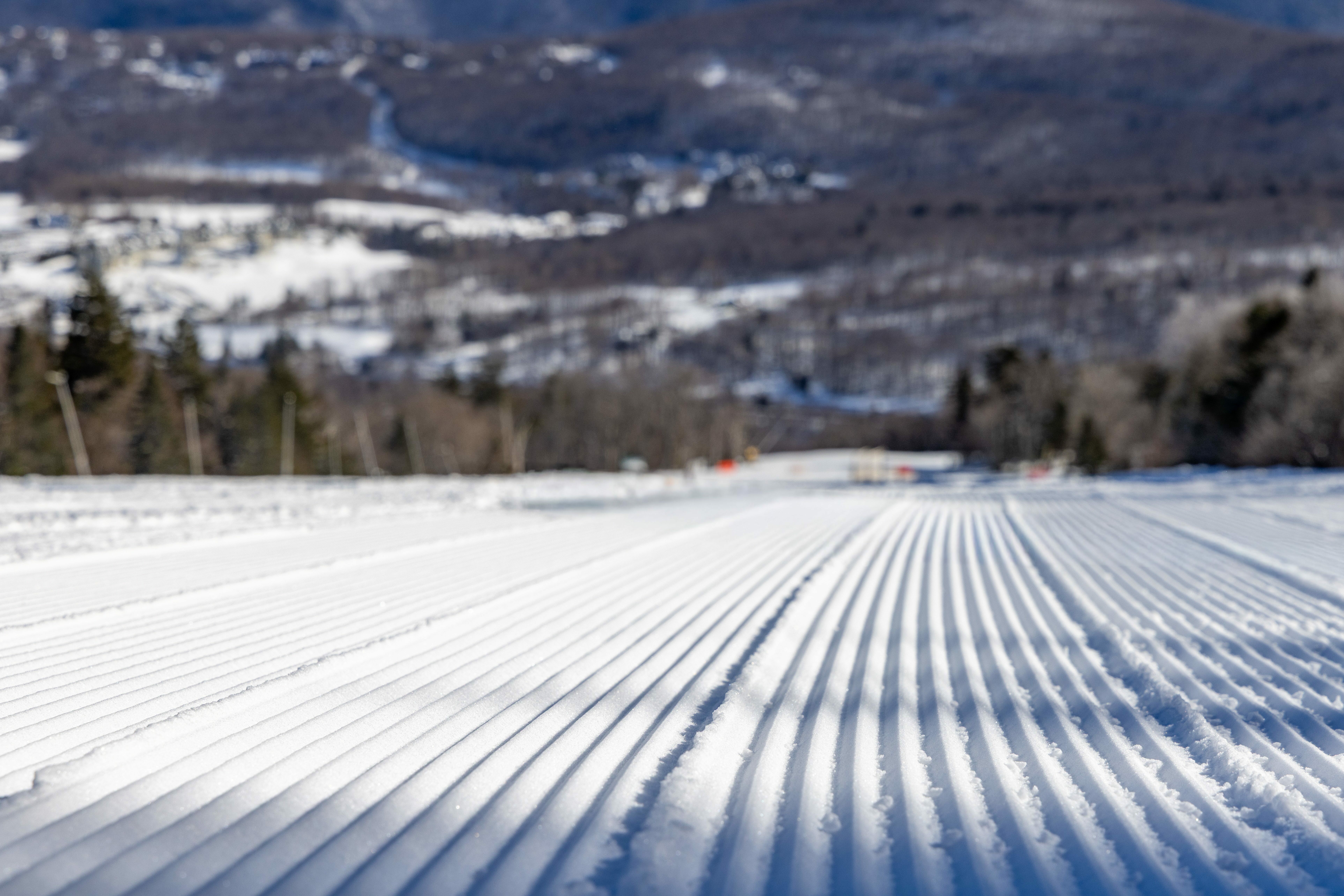
As the season continues on and temperatures begin to fluctuate more frequently, more attention needs to be paid towards snow preservation. One easy strategy for keeping snow alive is just letting it be.
“General rule of thumb is not to groom in the rain or when the snow’s wet. If it’s going to pour all night, there really is no sense in going out—if you go out and groom, it might wash away and basically melt. But oftentimes, you have to go out and do something, so we try to wait out the rain as long as possible.”
One of the things that needs to happen each night is smoothing out the entrance and exit of each lift. During peak winter, much of a given night’s work revolves around building height in a lift’s load station or removing grade from a lift’s unload, all to ease the process of getting on and off the lift. During the spring, when extra snow is harder to come by and snow preservation is on the mind, this same work becomes a bit more difficult.
“The loads and unloads are probably the trickiest and most intricate part of what we do because there’s so many things to groom around. For Superstar, we pretty much have to rebuild the road to the load station from scratch every single weekend. That thin ribbon of snow melts pretty fast, but it is kind of the cost of doing business.”
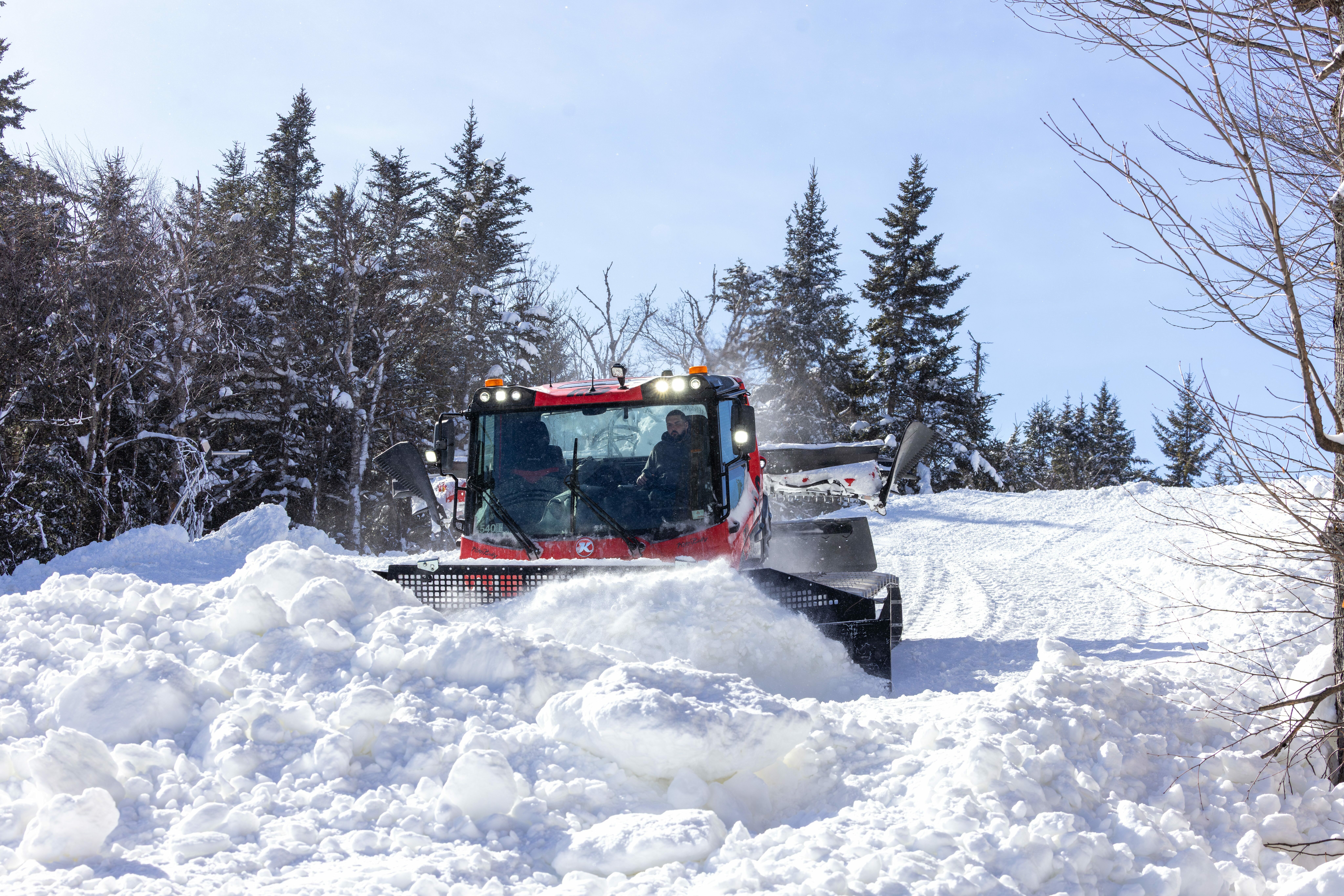
When the snow starts to go, the decision of whether or not to maintain or resurrect a certain trail comes down to two main ingredients: knowledge of the mountain and LiDAR.
“A lot of it boils down to experience and what we’ve seen in the past. But now, with more machines equipped with the snow depth technology (LiDAR), groomers are able to go out, gather that info, and I can look at it to see what is or isn’t possible... That was never a thing 10 years ago, even 5 years ago.”
As opposed to the middle of February, when aerating a harder snow surface makes for better skiing, the same tactic is used much less in the spring when snow preservation is the goal. “When it’s warm out, you’re now just mixing in all of that warm air. The snow is cold and wants to be cold, so the longer you let it sit, the longer it’s going to stay frozen.”
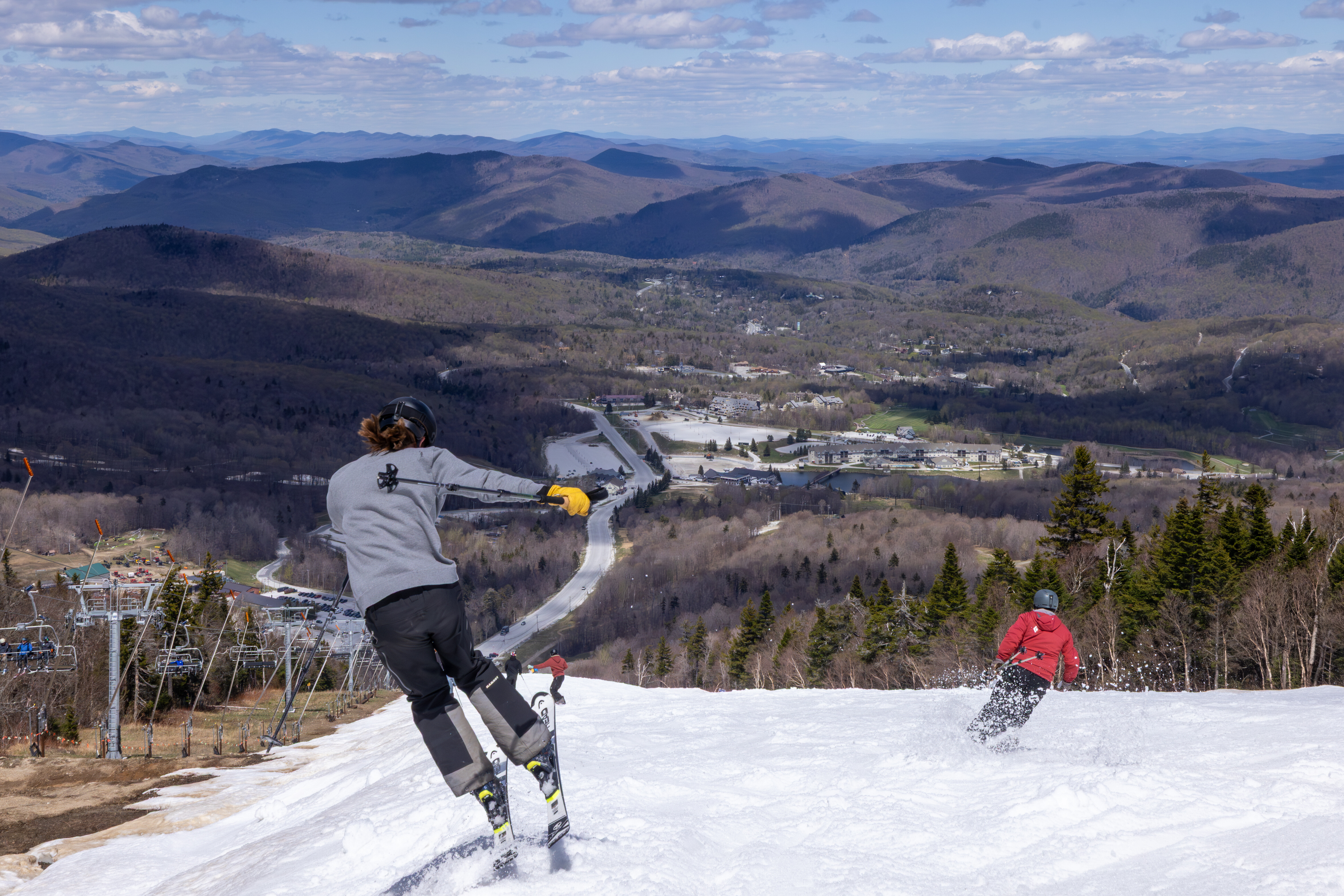
As we get deeper into May, results from recent LiDAR scans are promising, even on Superstar’s headwall. “We’re looking pretty good,” Dave says.
When pressed for how long we’ll be on snow this season, Dave gives somewhat of a prediction while touting our recent history.
“I don’t want to put a date on it myself, but let’s just say that every year since I’ve been in charge of grooming, we’ve made June 1st, with two exceptions: COVID [in 2020], where we closed in March, and last year, when we replaced the lift. Every other year, we’ve made June 1st.”
While Dave likes the challenge of making June skiing come to life every year, he makes sure not to take too much of the credit for it.
“I just write on a map with a marker and say, ‘do this!’”, he jokes. “It takes a village, and I rely very heavily on the entire grooming team and their experience, passion, and ability to do what they do.”