Meet the Trail Crusher, The Beast's Latest Bike Park Investment
In a previous Insider Blog, we shared news about one of our many investments made by our independent ownership this summer: the trail crusher, a $200k+ piece of equipment designed specifically for bike trail maintenance. As our first summer with this new machine starts to draw to a close, we wanted to provide an update on this investment to let you know where it's been, where it's going, and how it fits into our larger plans for the Bike Park.
First, how does it work?
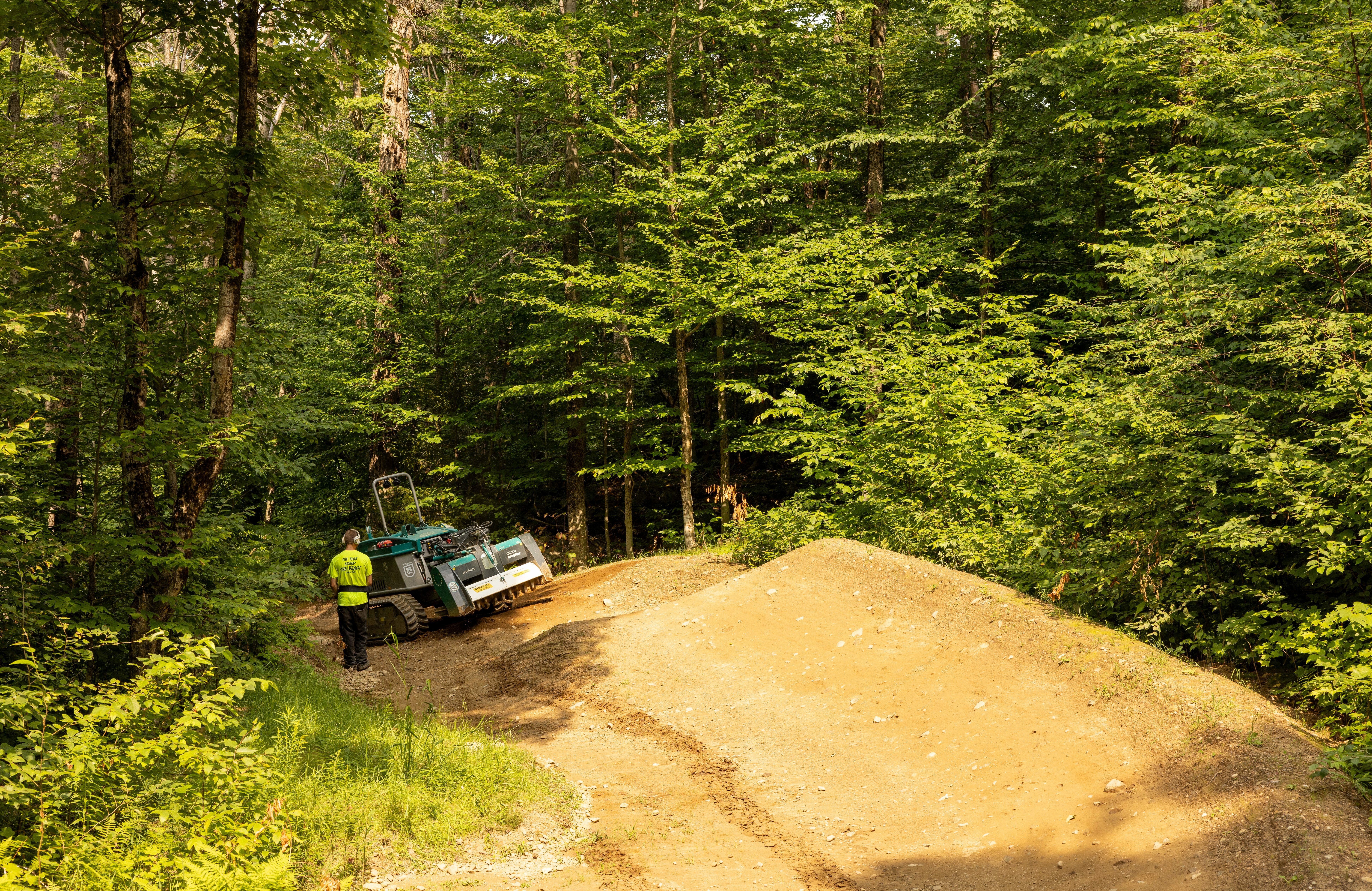
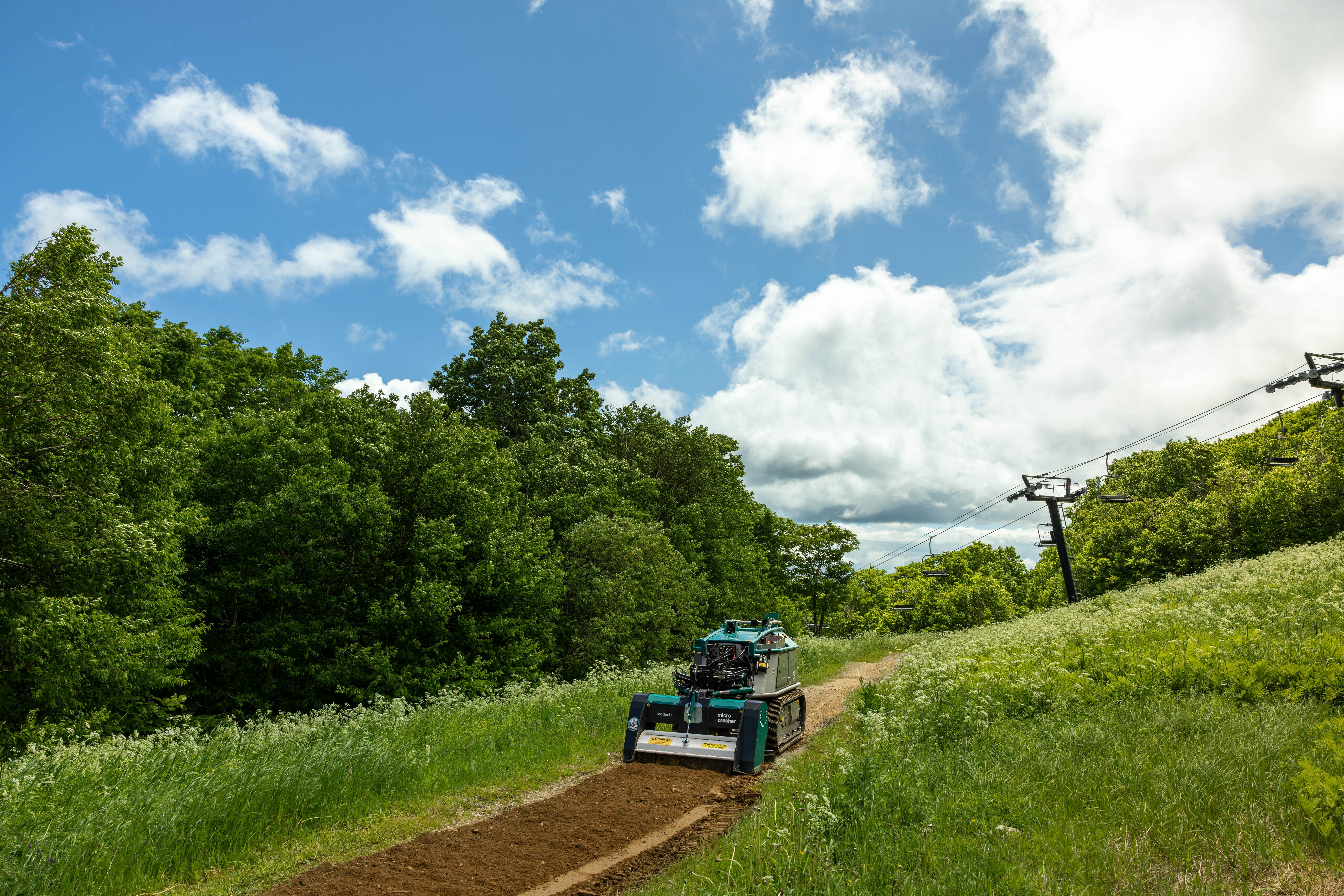
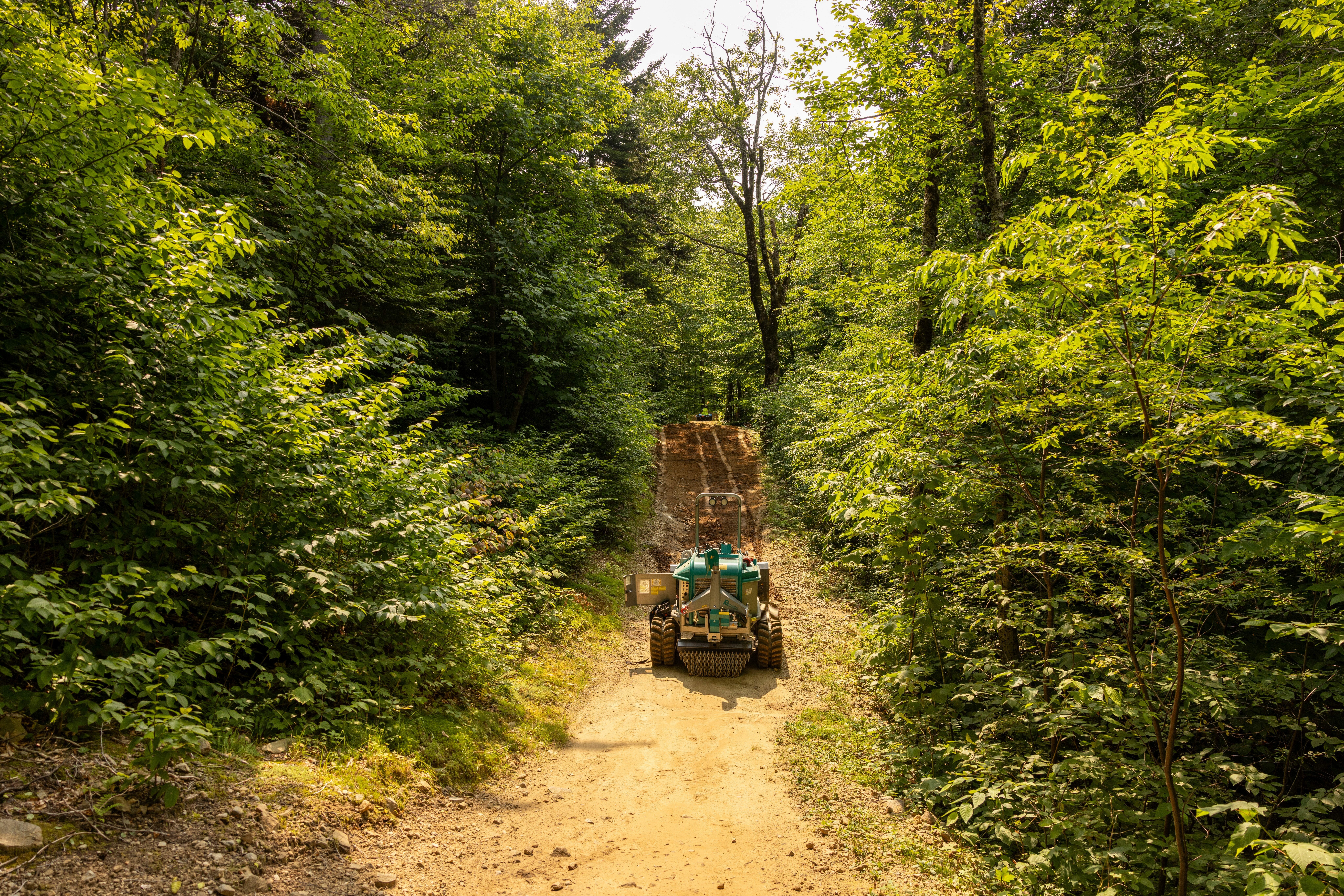
The trail crusher, more formally known as a Moritz, is a remote-controlled crawler carrier, a type of construction vehicle generally used to transport material across rough terrain. This specific machine, manufactured by German company Pfanzelt, was designed to be outfitted with specialized attachments like the trail crusher, which can be applied in places like our very own Bike Park. In short, it chews up sections of trail and spits out soft dirt behind it that, once packed down, provides a better riding surface than the rain ruts and brake bumps that can build up over time.
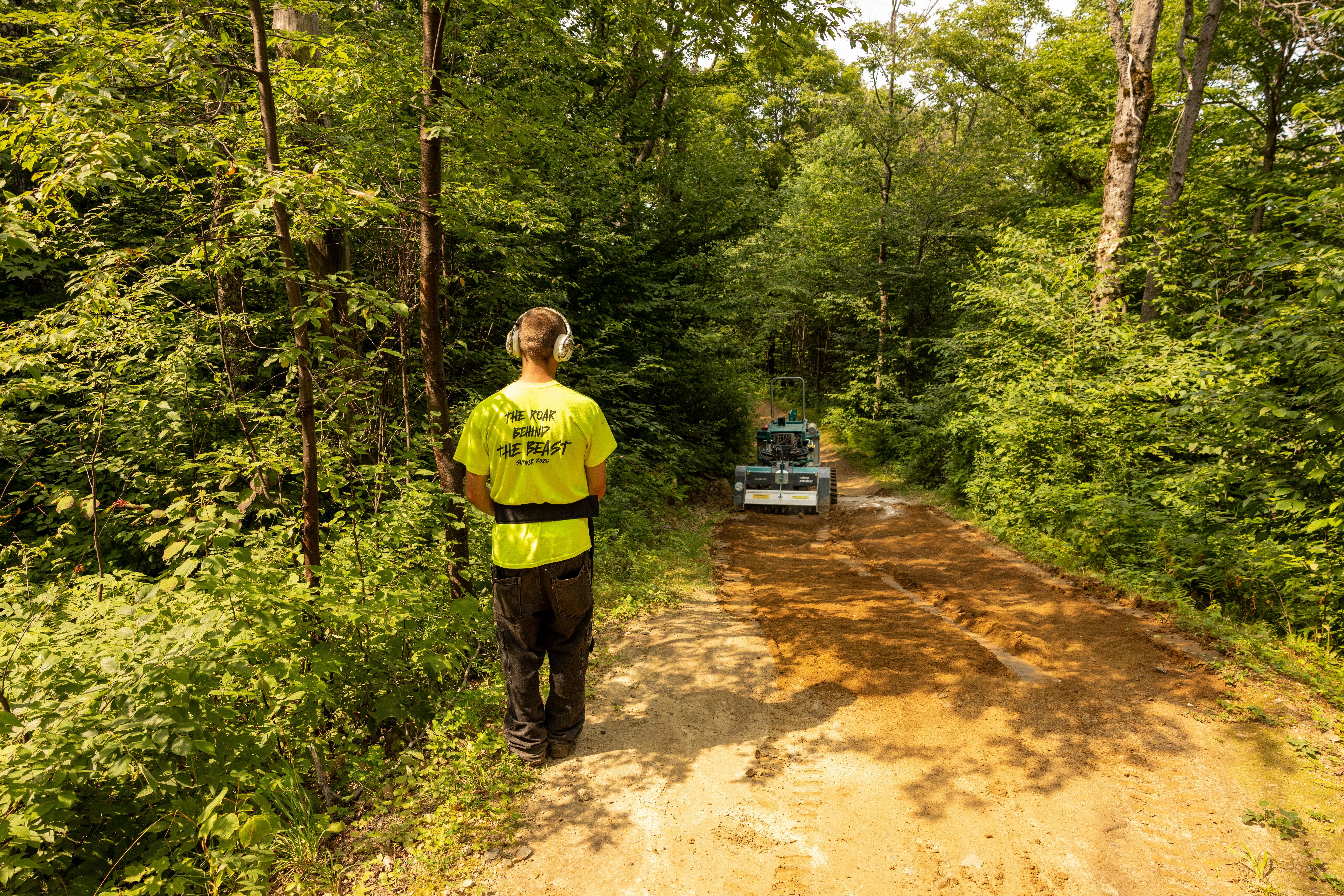
However, with a machine as complicated as this one, operating it is not quite as easy as turning it on and watching it go. Our Trail Crew's main trail crusher operator this summer, Ben Gyulay, detailed all that needs to happen before it even makes it to the trail. The morning pre-op check involves looking at normal fluid levels, making sure bolts are properly tightened, and adding plenty of grease. With all the grease points on the machine, it takes an extra person to complete this entire process before we're even ready to move. After that, another member of Trail Crew will often also help with transporting the trail crusher, which involves riding alongside it in a four-wheeler and then using the remote controls to drive it.
As someone who has sat behind the sticks of grooming tractors and excavators alike, Ben is no stranger to operating machinery, but the remote-controlled nature of this trail crusher sets it apart. "I kind of describe it as running an RC car that's worth as much as a house," he says.
Each time the trail crusher is used, Ben looks to recruit two to four other members of Trail Crew to speed up the process. Half of the group is the "pick team," who breaks up any of the larger rocks on the trail with pickaxes or otherwise kicks them off to the side. Though the trail crusher is built for grinding through rocks, dealing with the largest ones ahead of time reduces the machine's wear and tear and speeds up the overall process. The other half of the crew rakes and smooths out the fresh dirt the trail crusher leaves behind.
Still, even with up to five people doing different roles simultaneously, the work is much quicker and requires much less manual labor than working on a comparable stretch without the trail crusher. "If you've worked hand crew, you know much raking dried bike ruts is pretty much like raking concrete," Ben says. Instead of hammering away with pickaxes, our 6,000-pound friend can accomplish much of the grunt work.
Where has it been?
When the trail crusher first arrived in mid-June following a delay at customs, our first trial runs covered some of our most traveled terrain on Snowshed. Upper Easy Street, which Ben estimates can see trail maintenance up to four or five times each year, was our first target, followed soon after by Upper Roller.
After a couple of weeks of getting used to the machine, the team hit a small setback. Bolts that held the trail crusher's tiller in place sheared off, an issue that the machine's manufacturer had never come across before. After replacement parts shipped from overseas saw further delays in customs, our Vehicle Maintenance team quickly got the trail crusher running again, and it's been full steam ahead ever since.
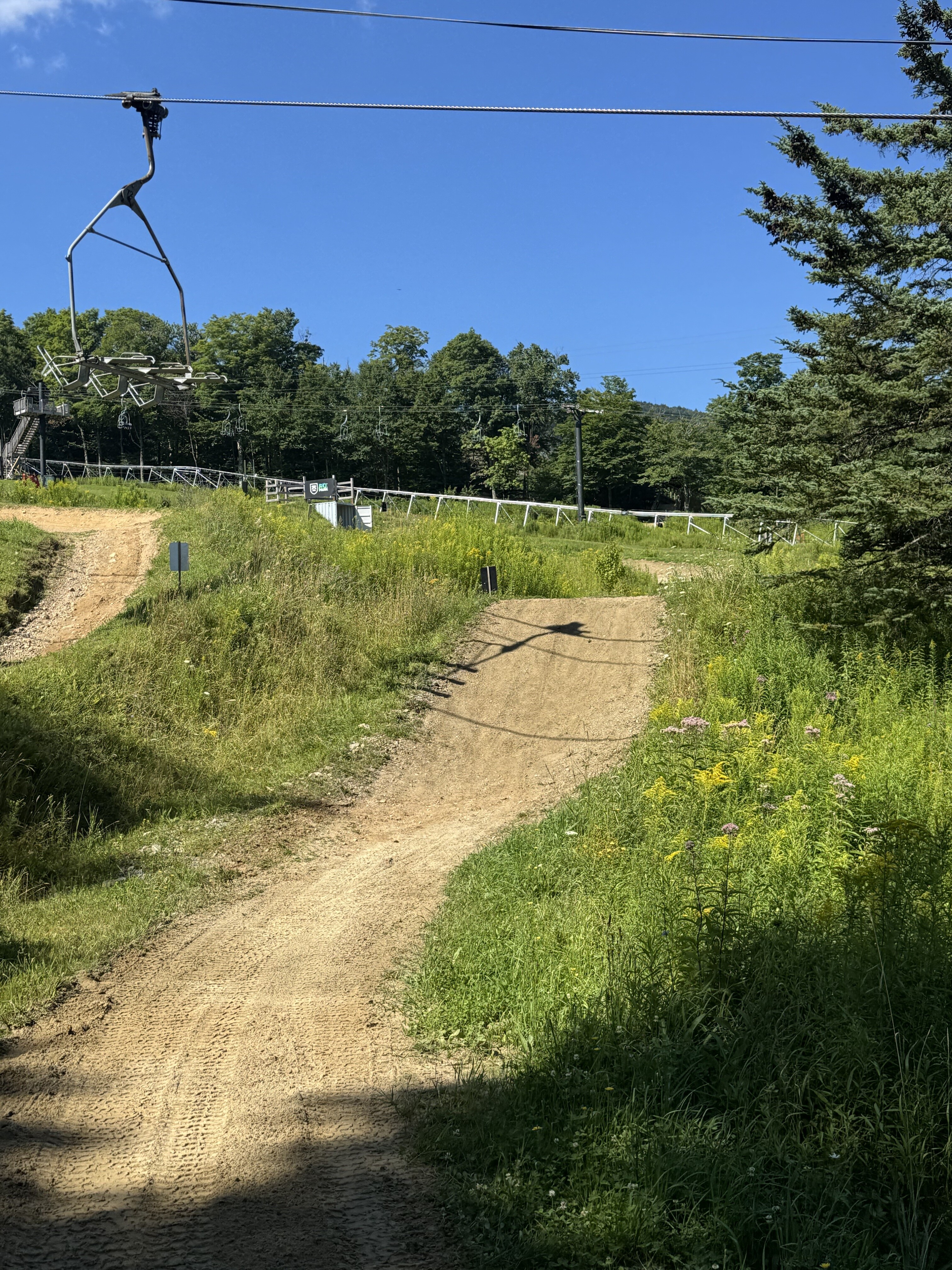
On Snowshed, it's since made its way down Lower Easy Street, Step It Up, Coaster Trail, Lower Jump Start, Stinky Skills Zone, and the Easy Street Progression Park. "I think I've hit every open slope section on Snowshed," Ben says. Over on Ramshead, it's tackled sections of Krusty, Sideshow Bob, and even the whale tail drop on Goat Skull.
Kayla Sarajian, who oversees our Trail Crew, Patrol, and Lift Operations teams as our Mountain Experience Manager, has helped map out much of where the trail crusher has gone this season. "It's about finding those access points," she says. "It makes [using it on] Ramshead a little trickier just because Ramshead has a lot of wetland on looker's right of the lift. So there's a lot of bridges there." Though plenty capable of holding up a train of mountain bikers, those wooden bridges weren't exactly made to withstand a 6,000-pound crawler carrier.
Even on Snowshed, not every trail is ideal for receiving maintenance via the trail crusher, including Coaster Trail. It doesn't quite fit through the trail's tight berms, is too heavy to make it across its many bridges, and can be tricky to navigate around some of those same wooden bridges. But, as Kayla mentions, "it can go after the Conex bridge all the way down to the bottom." On one morning in early August, Ben took it down there to do just that. "I was able to knock out the landings at the bottom of Snowshed—the hip, whale tail, and cannon—all before 10:00 a.m.," Ben says. "And it looked really good. So that's something we've never been able to do before."
How well is it working?
Even in what both Kayla and Ben describe as a learning year with the trail crusher, the early results have been promising. As a reminder, the machine was demoed for the first time on North American soil just last summer during the NSAA's Downhill Bike Park Summit in Killington. Under independent ownership, we were able to act fast and purchase one for our own use, but as one of its very first users in North America, we're writing the blueprint instead of following one. Despite its limited runtime thus far, our crew is definitely getting the hang of things.
For instance, a crucial aspect of building and maintaining bike trails is simply the amount of dirt that's available. As thousands and thousands of riders slowly but surely knock more dirt off the trails, the tougher, rockier surface left behind isn't always as malleable as we want. When our excavators need some softer earth to work with for building takeoffs and landings, that's where the trail crusher comes in.
You'd think when you hear terms like "fluff" that we'd be talking about powdery snow instead of rugged loam, but both Ben and Kayla characterize the material left behind by the trail crusher as fluffy. If you got the chance to ride through Stinky Skills Zone this past weekend after the trail crusher came through, you likely noticed that softer surface beneath your tires.
Part of the reason behind purchasing the trail crusher in the first place was to give our beginner trails a more consistent refresh throughout each season. According to our Mountain Sports instructors, who likely ride our Snowshed trails more than anyone, you can definitely tell when the trail crusher has recently run on a given trail. Jake Wlochowski, one of our mountain bike coaches, has noticed that smoother ride.
"It's kind of like a smooth, buttery feeling." Jake says. "It's especially nice on blind landings and stuff like that. Definitely really helpful for the flow trails and meeting those expectations of getting smooth flow trails."
"For a beginner rider who may be kind of tense and nervous, it's good having something smooth and relaxing so they can ease into it," Jake adds. "I think people like when it's nice and clean, not totally sanitized, like a couple rocks here and there to kind of dip their toes in. I think it gets more people having a positive experience and growing this sport as a whole."
Ben, who has checked and double checked those same flow trails, agrees with that sentiment.
"It makes the overall riding experience better. It's flat, [there's] less rocks, it's filling ruts. It's giving the trail a facelift, is the best way I could describe it."
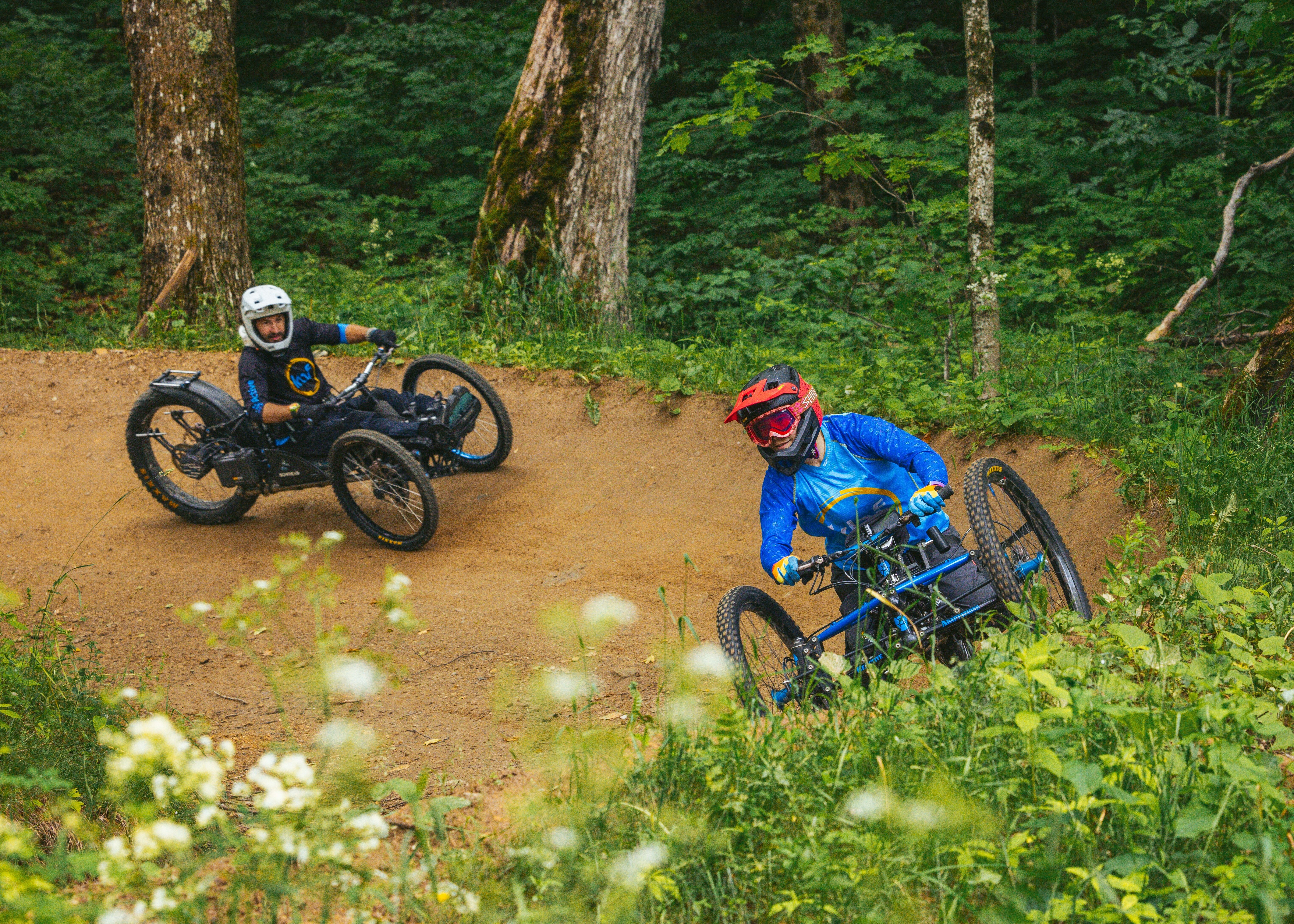
A bonus benefit of the trail crusher is simply its width. This summer, grass was starting to grow on some of Easy Street's less used ride lines before the trail crusher came in and reestablished the full width of the trail. If you've ridden in our Bike Park this year, you've probably noticed our new trail signage indicating which trails are safe and approved for adaptive riders. The trail crusher has been instrumental in keeping those trails in particular wide enough. "I think it's great for the Vermont Adaptive riders," Ben says. "Those bikes, they require a certain width for their wheels."
Where is it going next?
Just this week, the trail crusher has made its way into Lower Sideshow Bob. Over the next week or so, it'll help give that entire section of trail beneath Lower Steel Panther a full refresh, mainly taking care of the rain ruts and divots that end up forming on straightaways. If you catch a glimpse of it while around that area, you'll likely see an excavator also working nearby to speed up the process. After the success our team had using both machines together in Stinky Skills Zone, Ben says we'll be continuing that strategy.
"We're going to use it more with the excavators... that's been a cool thing that we've found is pairing it with an excavator."
After that, we may see the trail crusher a bit more on some sections of Sideshow Bob before it settles into a more "as needed" role back on Snowshed. "For the rest of this season, it'll be [mostly] picking and choosing," Ben says.
Looking ahead to next season, Kayla says that'll ultimately be our long-term strategy for it. "When we open, it runs on every single trail on Snowshed with the exception of Upper Rabbit Hole. That's the goal," she says. "Then it would turn into a bi-weekly rotation for the trails that it can go into." Even before we open next season, Ben thinks having it at full capacity will be a big help. "If we can start crushing while there's still snow up on Skyehawk, then that should be able to open bike trails sooner, faster, and better," he says.
With the work the trail crusher has already done, we're also setting a good foundation for the future of the Bike Park. "I think when we work next year, we'll look at a lot of stuff and think that looks pretty damn good for the beginning of the season just because we hit it with the trail crusher," Ben says. "All the stuff that it does seems to really set and stay."
One thing that will surely continue next summer is the regular communication between our Trail Crew and Mountain Sports instructors. Jake has appreciated the daily operations updates and essentially real-time feedback shared between the two teams. "I think we've definitely established a really good connection," Jake says.
Even this far into the summer, there's still a bit more to be learned. Soon, we'll be testing out the trail crusher's winch capabilities, which would keep it operational on steeper berms and potentially help it navigate around some wooden bridges. Before that becomes fully functional, it's obviously still a plenty capable machine. According to Ben, "It can pretty much handle anything we have here."
At the end of the day, the hard work of our Trail Crew members like Ben is what really keeps our trails open and riding well. Though he's been impressed with the trail crusher's work, he stresses that "it's a maintenance tool," and nailing down its use as just that will help us going forward.
"I think next year is when we'll really see it excel."